Zero Hedge

EUR Drops As ECB Hikes Rates (As Expected); Raises Inflation Outlook, Sees Downside Growth Risks

EUR Drops As ECB Hikes Rates (As Expected); Raises Inflation Outlook, Sees Downside Growth Risks

The European Central Bank increased interest rates for the second time since the Iran war broke out in February, responding to signs inflation is set to stay well above 2%.

The deposit rate was lifted by a quarter-point to 2.5% on Thursday, as predicted by almost all economists in a Bloomberg survey.

“The conflict in the Middle East continues to generate inflation pressures, and inflation is set to remain well above target for an extended period,” it said in a statement.

“The outlook remains highly uncertain, with risks to the upside for inflation and to the downside for economic growth.”

GUIDANCE:

As widely expected, the Governing Council left his language on the future rate path unchanged, repeating the mantra of being “well-positioned" and following a "data-dependent and meeting-by-meeting approach."

That actually leaves all options open for the coming months, and it seems likely that Lagarde will try to do the same later.

INFLATION

  • Inflation is set to remain well above target for an extended period.

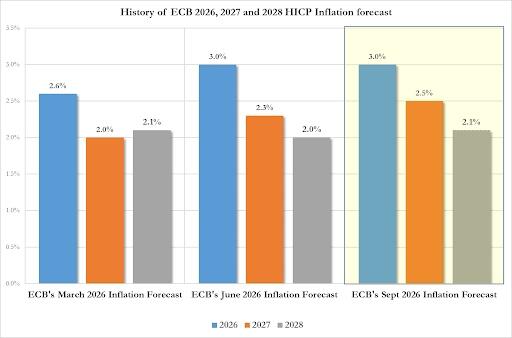
The ECB raised its inflation outlook for the next two years...

  • *ECB SEES 2027 INFLATION AT 2.5%%; PRIOR FORECAST 2.3%

  • *ECB SEES 2028 INFLATION AT 2.1%; PRIOR FORECAST 2%

  • *ECB SEES 2027 INFLATION EX-FOOD/ENERGY AT 2.6%% VS 2.5%

Despite more encouraging signals, though, as underlying inflation and a closely watched gauge of services prices retreated. Wage pressures also eased.

ECONOMIC OUTLOOK

  • The outlook remains highly uncertain, with risks to the upside for inflation and to the downside for economic growth.

Thursday’s move puts euro-area policymakers further ahead of their peers in reacting to the energy-price surge that’s produced the fastest inflation in almost three years.

Traders see the ECB doing more, pricing two further hikes by mid-2027.

That contrasts with the Federal Reserve and the Bank of England, which are yet to tighten monetary policy over the fighting in the Middle East and may refrain again next week.

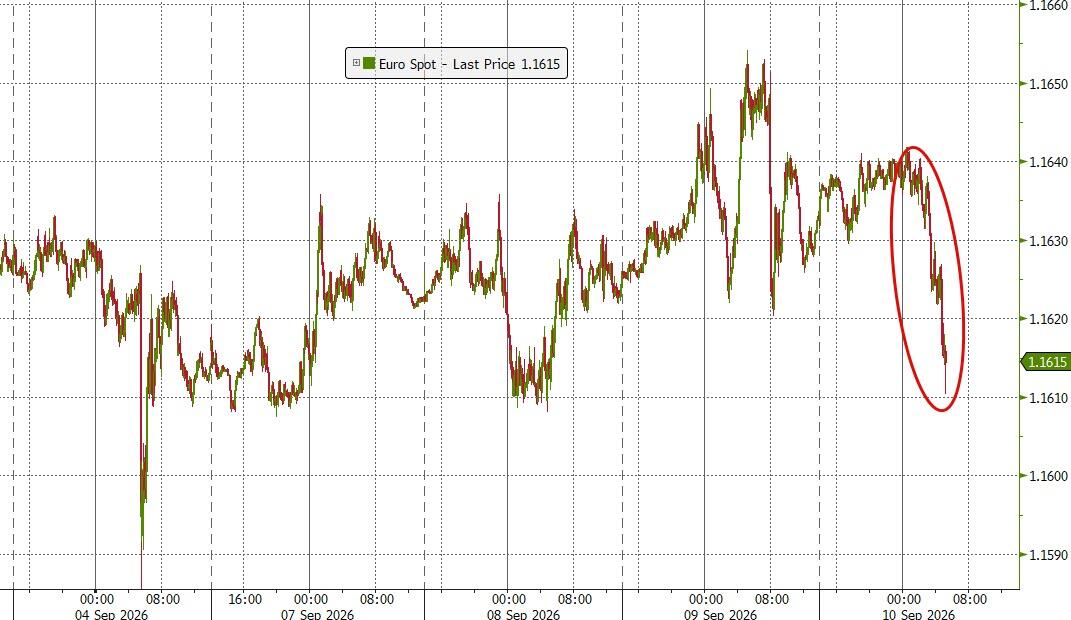
Interestingly, despite the relative hawkishness, the EUR is fading this news...

Patrick Ernst, a strategist at J.P. Morgan Private Bank:

“The ECB moved as anticipated, but what accompanied that rate decision matters more. In keeping the door open to further tightening, policymakers made clear that an energy-led inflation risk is still very much in play. One hike is not a ceiling. The odds of another before year-end have risen.”

President Christine Lagarde, who continues to be linked with an early departure from her role, will face journalists at 14:45 p.m. in Berlin.

Tyler Durden Thu, 09/10/2026 - 08:27

Hike Or Hold? Debating The Coming Fed Decision

Hike Or Hold? Debating The Coming Fed Decision

Authored by Michael Lebowitz via Real Investment Advice,

Heading into the September 16 FOMC meeting, the debate over whether the Fed should raise rates or hold is heated. To help you appreciate the range of views, we present this article as a courtroom exercise. We will let the prosecution make its case for a rate hike, and the defense make its case for a hold. We will render our verdict after both sides present their cases.
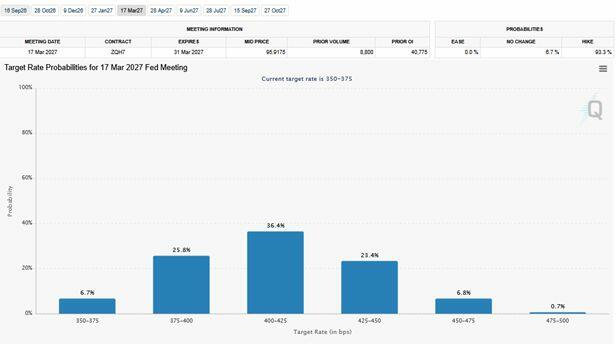
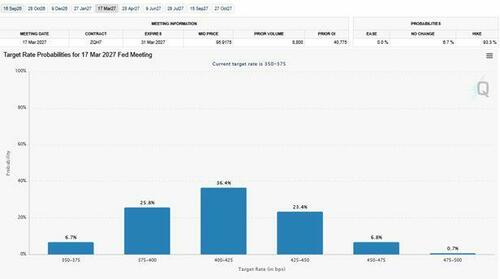
To set the stage, Fed funds futures are pricing in a 60% chance of a September rate hike, with further hikes possible at subsequent meetings. The graph below shows the market is pricing in a 36% chance of two rate hikes by mid-March 2027, with roughly equal 25% chances of three hikes or only one.
The Prosecution's Case: Rate Hike

With the strong August BLS employment data, the case for a hike now has three legs.

The first is Fed Chair Kevin Warsh's Jackson Hole address on August 28. His policy-related comments were direct: he wants to restore credibility to his pledge to get inflation back to 2% in short order. Below are comments we wrote in Warsh Makes A Hawkish Pivot:

Warsh was blunt in his assessment of inflation. He signaled the Fed may not be done fighting inflation, saying financial conditions didn't look restrictive enough to him and that recent benign inflation readings hadn't convinced him the trend was improving meaningfully. Per Warsh's speech:

"And while this summer's PCE and CPI readings were better than expected, they do not tell me that underlying trends have meaningfully improved."

"Here is my standard: We must be confident that underlying inflation is moving to our objective, clearly and at sufficient speed. Otherwise, we have work to do. That's our job... our mandate... and our charge to keep."

In his words, Warsh says the Fed has "work to do."

The second leg is the most recent BLS jobs report. Nonfarm payrolls jumped 162,000 in August, more than triple the 50,000 number Wall Street expected. Furthermore, the prior negative 23,000 number was revised upward to a positive 21,000, and the unemployment rate held steady at a historical low of 4.1%.

For the prosecution, that exhibit fits well with New York Fed President John Williams's claim that rising bond yields simply "reflect the strength of the economy." Fed Governor Lisa Cook, a more dovish member, seems to be coming around to the idea of rate hikes, telling reporters, "I would support an increase if it becomes necessary to bring inflation down. It may not."

Beth Hammack- The Lead Prosector

Beth Hammack, President of the Cleveland Fed, has been the most consistently hawkish voice on the committee and presents the third leg- the persistence of high inflation. She dissented at the last FOMC meeting in favor of a hike, arguing that the Fed likely needs a sequence of rate increases rather than a single move, and has recently said that "now is the time to act."

Hammack doesn't seem concerned that higher interest rates will impede the economy. To wit,

One 25 basis point move probably doesn't do a whole lot for the economy

Her overarching reasoning is that current rates aren't restrictive; accordingly, they won't bring inflation back to 2%.

I just don't see it coming back on its own

Furthermore, she believes delaying rate hikes only makes the job harder later and that inflation is more broad-based than just oil.

Regarding the labor market, she has pushed back on weak-jobs narratives, saying she's "still not seeing a problem" and pointing to unemployment close to full employment.

The labor market is right around my level of maximum employment.

Her employment view helps explain why she's comfortable prioritizing fighting inflation over the health of the labor market. The most recent employment data will strengthen her opinion.

The Defense's Case: Hold Rates Steady

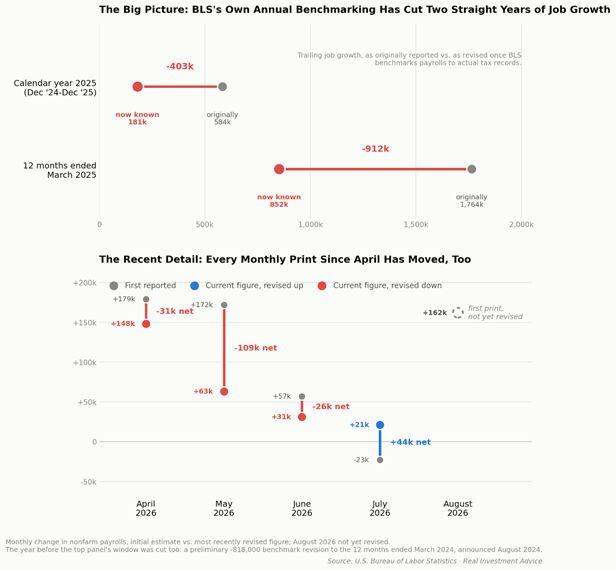
The defense will not put much faith in the recent employment report. Instead, it will focus on the recent string of weak employment data and, importantly, the large revisions that have turned good job reports into bad ones. That skepticism over jobs data is warranted, as shown in the chart below.
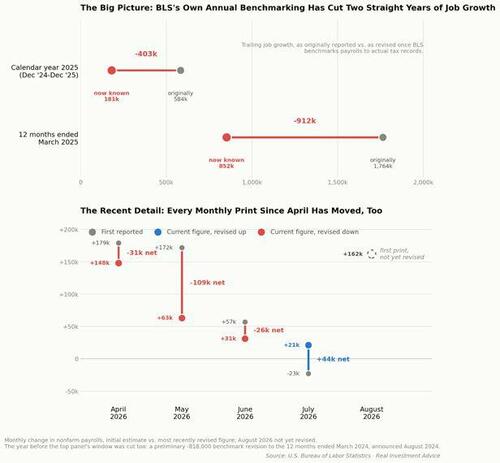
Twice a year, BLS benchmarks and revises the payroll survey against actual unemployment-insurance tax records. The preliminary 2025 benchmark knocked 911,000 jobs off the year ended March 2025, cutting average monthly growth in half from a reported 147,000 to 71,000. When it was finalized in January, calendar-year 2025 growth got cut again, from a reported 584,000 down to just 181,000. The year before that, the preliminary 2024 benchmark had already cut 818,000 jobs from the year ended March 2024.

More recently, April's initial 179,000 gain is now 148,000, and May's initial 172,000 gain is now just 63,000. July was reported as an outright loss of 23,000 jobs but has since been revised up to a positive 21,000. An economic data series that has been grossly overstated in two straight annual benchmarks and then turned a reported loss into a gain within a month is data that we must be dubious of. Last week's gain of 162,000 jobs has not yet been revised.

Richmond Fed President Tom Barkin's read on the underlying labor market is as follows: "It's not loose, it's not tight, it's sort of been a weak balance," he said, describing employers who are neither firing employees aggressively nor expanding their payrolls.

Inflation And Other Risks

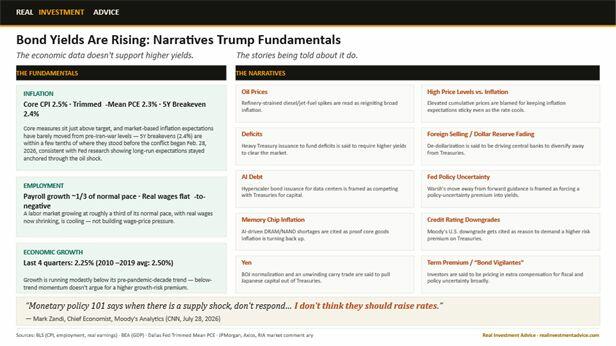
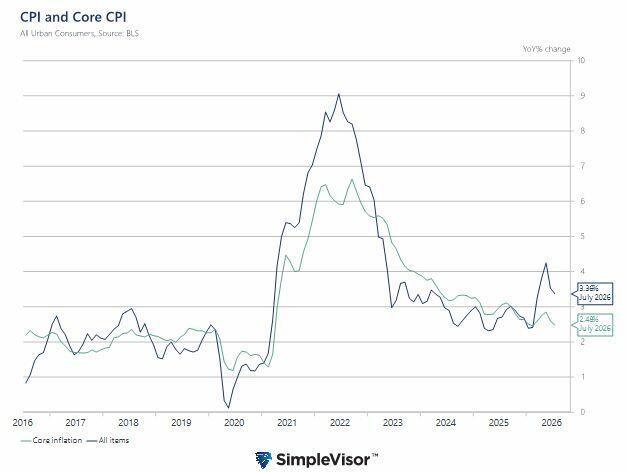
On inflation, the defense will note that the July CPI report was benign. Headline CPI rose just 0.1% month-over-month, and core CPI rose 0.2%, but year-over-year rates of 3.4% headline and 2.5% core are above the Fed's 2% target. The recent trend, not the dated annual comparison, is what should matter most for a forward-looking rate decision, and the monthly trend is cooling.

It's worth adding that the Dallas Fed Trimmed Mean PCE, which ignores the most volatile components of PCE, sits at 2.28%, close to the Fed's 2% target. At his Senate confirmation, Warsh cited the trimmed mean as a valuable inflation gauge. Furthermore, five-year inflation expectations, another tool many Fed members rely on, sit at 2.4%, slightly below where they were before the Iranian conflict.

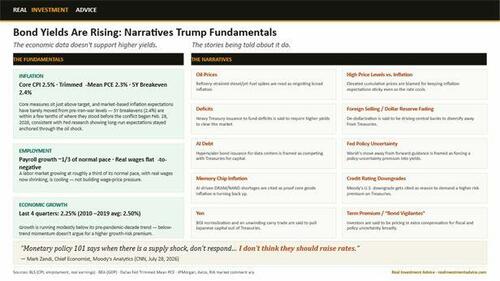
The defense's strongest proponent may be Governor Waller, who argues against rate hikes. He believes that the forces pushing yields higher are largely outside the Fed's price stability and full employment mandate. The forces include deficits, dollar concerns, AI-related capital needs, and the oil shock tied to shipping disruptions rather than domestic demand. Hiking to fight yield narratives risks a policy error.

The table below shows the fundamentals and narratives impacting the Fed's decision.
The Evidence

To assess both sides, let's review recent trends in the Fed's two mandates: employment and prices.

Labor Markets

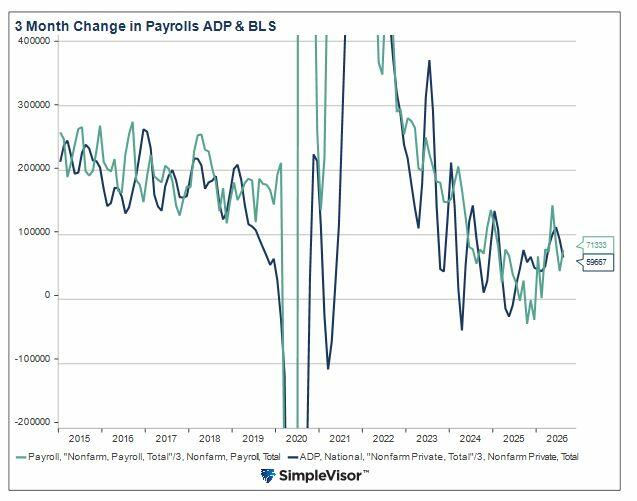
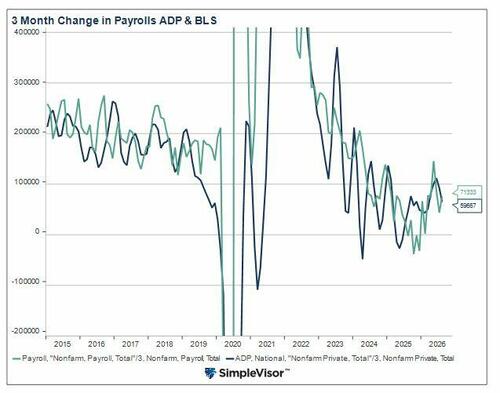
While the most recent labor data from the BLS was strong, we are highly skeptical, as negative revisions have plagued BLS data. Furthermore, recent ADP and JOLTS data offer little confirmation of a sharp pickup in hiring. The graph below showing the 3-month moving average of BLS and ADP highlights that 60k to 70k jobs are being added monthly, which is well below the 150k to 250k range preceding the pandemic. The labor force has grown by 8 million people since 2018, making recent data even worse in comparison.
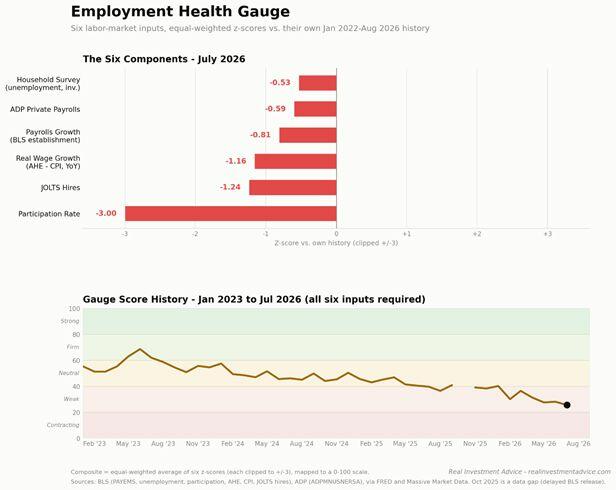
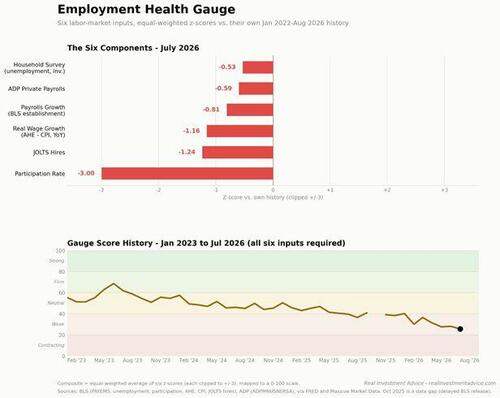
To better assess the labor market and its recent trend, we created a model using the following six factors:

  • BLS household employment - survey of individuals
  • BLS establishment employment - business survey and payroll records
  • BLS labor participation rate
  • ADP private payrolls
  • Real wage growth
  • JOLTS hires index

Our model expresses each of the six factors as a z-score against its own history since January 2022. This model doesn't provide a historical reading on employment but shows that the weakening trend of the last few years has worsened over the last six months.
Inflation

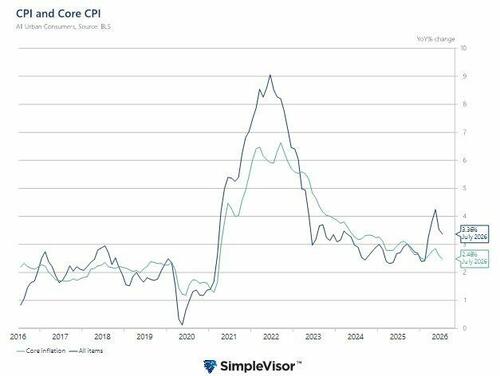
The graph below shows that year-over-year Core CPI sits near 2.5%, almost exactly where it stood before the Iranian conflict started. Moreover, the slow trend toward 2% still appears intact. That said, headline CPI remains elevated at 3.4%.
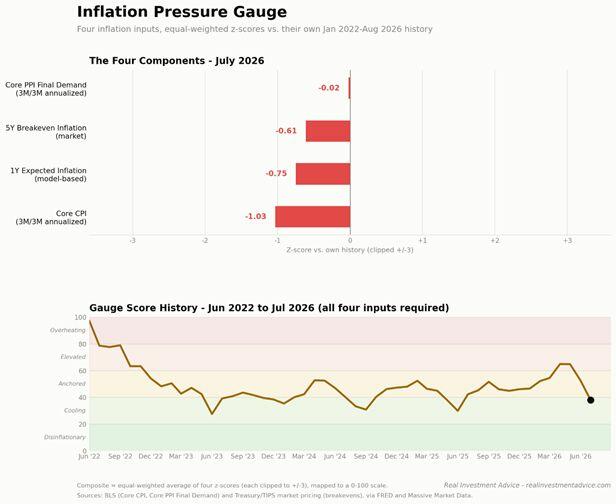
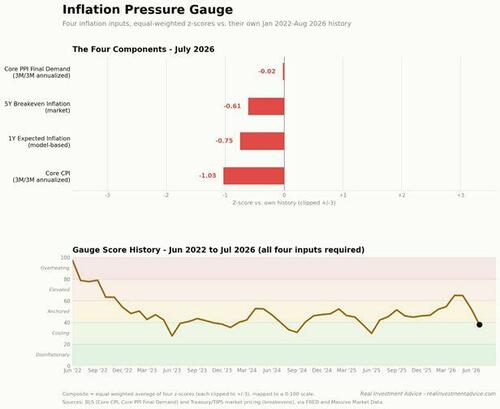
As we did with labor, we created an inflation trend model. This four-factor model compares the most recent three months of inflation data to the prior three months to detect trends.

Per the model shown below, inflation has been "anchored" since January 2023, albeit with a short spike coinciding with the Iranian conflict. Since then, the gauge has receded back toward 2025 levels and is now edging into the "cooling" zone. Like the employment gauge, all factors have a negative z-score, indicating the recent trend is softening.
Summary: Our Verdict

We are sympathetic to both sides. The prosecutor is 100% correct that we need to get inflation back to 2% as soon as possible. It has been above target for too long, and the Fed risks consumer and corporate spending behaviors changing in a pro-inflationary way. The debate at the Fed seems to come down to whether they let that occur naturally or force the issue.

The prosecuting side wants to raise rates to force inflation lower. The defense wants to wait, claiming the disinflationary trends that existed before the Iranian conflict are reasserting themselves and that higher rates could worsen an already weak labor market.

Some Fed members, including Warsh, claim that the recent spike in yields across the yield curve makes borrowing more restrictive for consumers and corporations, effectively doing the job for them.

We come down on the side of the defense, though the August employment number, assuming it holds up through revisions and similar strength persists, does weaken our case. Inflation should be hotly debated as it is. We are comfortable with recent trends and somewhat comfortable that, assuming oil prices don't spike, price trends continue lower.

The credibility argument supporting a rate hike concerns us most. The idea is that the Fed needs to raise rates to address rising bond yields and reassert "credibility," rather than respond to a confirmed breakdown in either of the Fed's dual mandates.

Yields have risen largely because of an oil-driven supply shock and concerns about swelling fiscal deficits. The Fed's short-term policy rate is poorly suited to address them.

Tyler Durden Thu, 09/10/2026 - 07:45

Brent Tops $102 As Mideast Conflict Intensifies, HSBC Hikes Oil Forecast

Brent Tops $102 As Mideast Conflict Intensifies, HSBC Hikes Oil Forecast

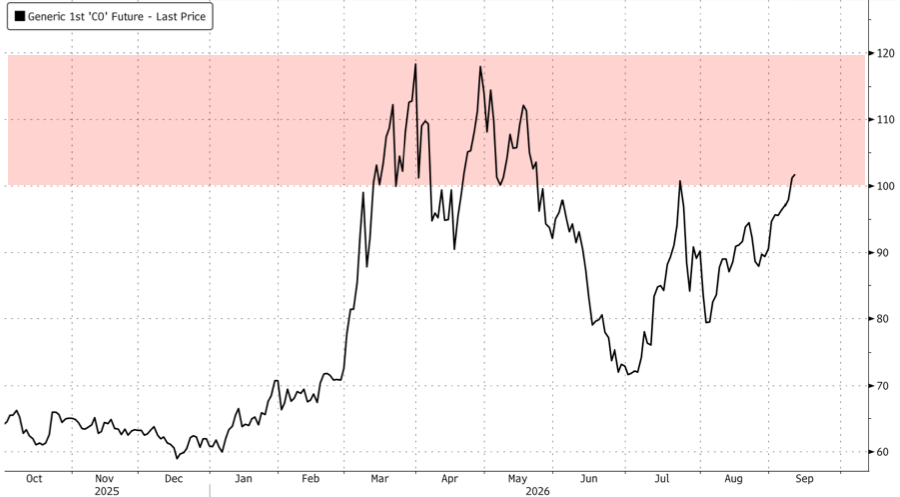
Brent crude futures traded above $102 a barrel Thursday morning after Iran threatened to intensify attacks, renewing concerns over tanker flows through the Hormuz maritime chokepoint. The supply risk extends well beyond crude to mounting shortages of refined products, particularly diesel, as the US diesel crack spread trades around $102 a barrel.

President Trump's indication yesterday that the conflict could continue beyond November's midterm elections suggests limited near-term fuel pump relief for working-class folks, with the US national gasoline average above the politically sensitive $4-a-gallon threshold and diesel at a record high. Trump also announced overnight a proposal for a $5,000 "Trump dividend" check for every American adult if Republicans retain control of both chambers of Congress.

Following Goldman, HSBC raised its 2026 average Brent crude forecast to $90 a barrel from $80, citing continued disruptions to shipping through the critical Gulf waterway that are expected to keep global oil balances tighter for longer.

With Hormuz flows running at roughly 30% of pre-conflict levels, HSBC analysts see the market adjusting to a prolonged period of depressed tanker transit through the chokepoint. That outlook suggests sustained supply constraints through year-end.

"The key indicator to watch is whether this will put an end to the heavy shuttling of oil through the Strait of Hormuz," said Arne Lohmann Rasmussen, chief analyst at Global Risk Management in Copenhagen. "It may not come to a complete halt, but combined with the more aggressive Houthis in the Red Sea and higher Chinese crude oil imports, the global oil market balance appears to be deteriorating again."

Earlier this week, Vitol Group CEO Russell Hardy said about 10 million barrels a day have been crossing the waterway, roughly half of pre-war levels. He added that an exact figure is hard to quantify and that volumes aren't guaranteed daily.

Read:

Goldman commodities strategist Yulia Zhestkova Grigsby sharply revised tanker-flow estimates through the Hormuz chokepoint to between 15 million and 16 million barrels per day, roughly two-thirds of pre-war levels. That's mainly because the market is not counting ships that turn off their automatic identification systems to avoid detection by Iran.

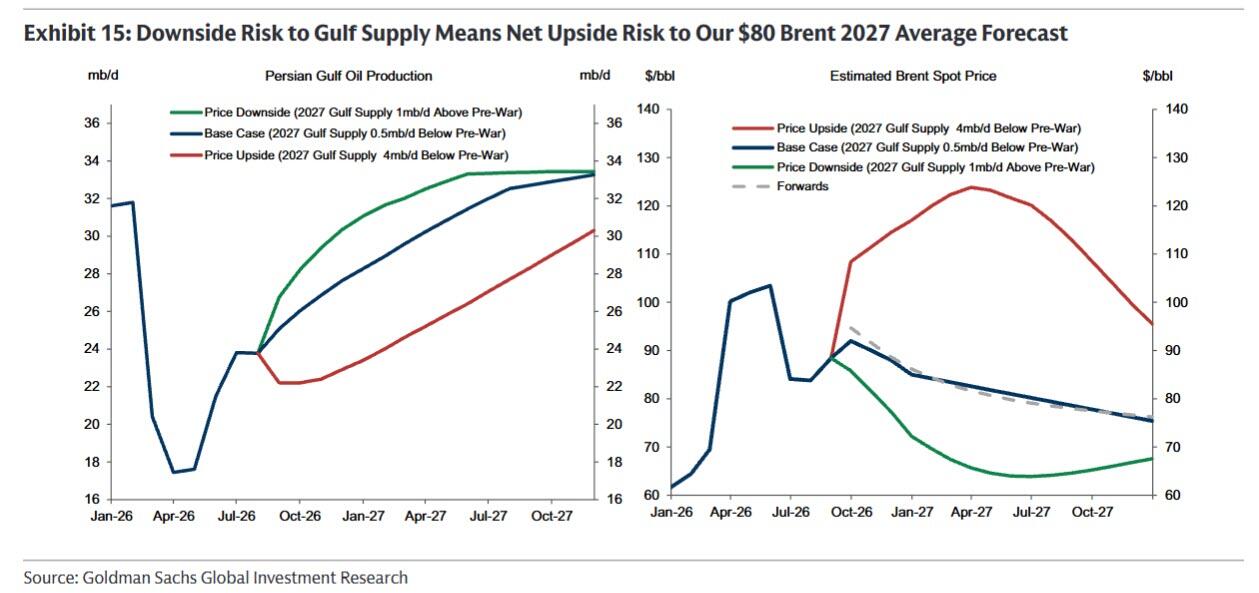
Goldman's Daan Struyven also noted one upside scenario this week that could push Brent to $120 if the conflict persists...

"The fundamental picture for products remains bullish with global inventories and reserves deteriorating," said Darrell Fletcher, managing director for commodities at Bannockburn Capital Markets. Before 'Operation Epic Furry', about a fifth of the world's oil and liquefied natural gas passed through Hormuz to global customers, mainly in Asia. The ongoing disruptions have sent NatGas prices in Europe above 81 euros on Thursday. 

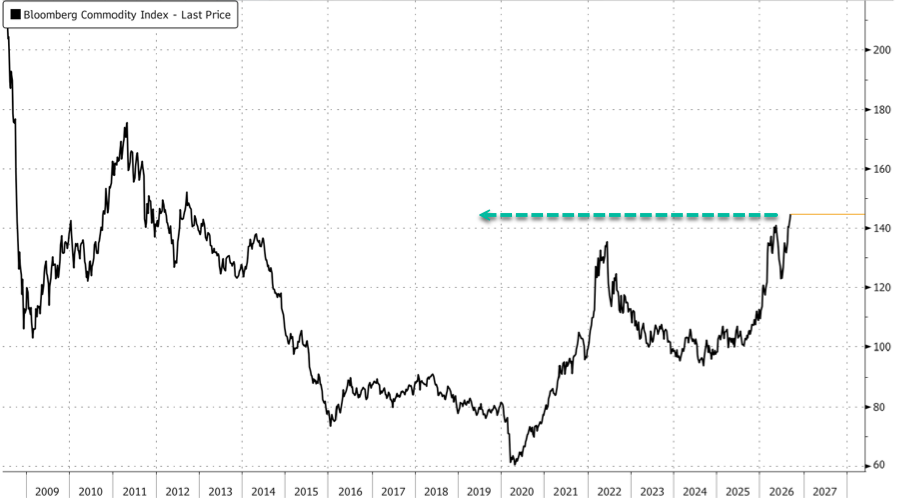
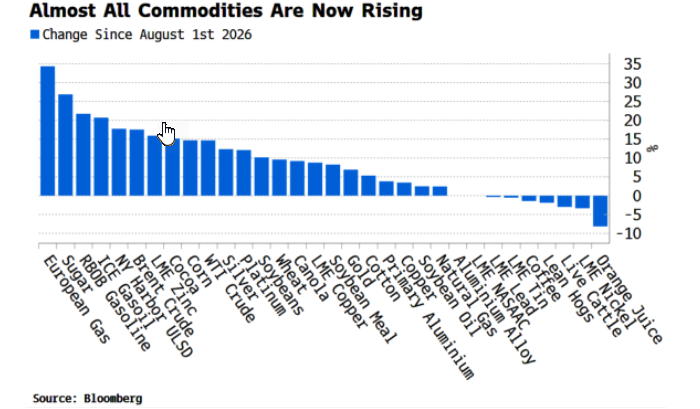
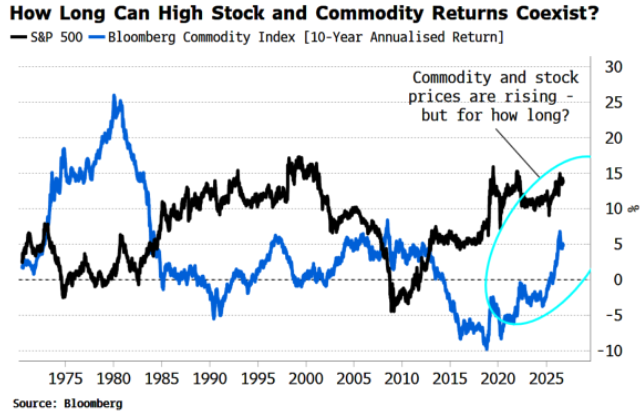
Beyond energy, a broad-based commodity rally has pushed agricultural products and metals higher, sending the Bloomberg Commodity Index to levels last seen in 2012. HSBC analysts spot a commodities cycle developing into a "super squeeze," which suggests the move could be sustained.

Tyler Durden Thu, 09/10/2026 - 07:20

HSBC Sees "Upside Risks" From "Super Squeeze" In Commodities

HSBC Sees "Upside Risks" From "Super Squeeze" In Commodities

London copper futures are trading north of $14,700 a ton, Brent crude futures have climbed above $101 a barrel, US diesel crack spreads are back in triple-digit territory, and the Bloomberg Commodity Index is at a 14-year high. The energy shock has broadened into a rally across the commodity complex, from energy to agricultural products to metals and other critical materials, with a growing number of Wall Street research desks identifying tightening physical supplies as a key driver.

HSBC chief economist for global commodities Paul Bloxham is the latest to warn that a "super-squeeze" in commodity markets continues to produce outsized gains.

"The 'super-squeeze' has continued to support elevated commodity prices … as the Iran and Russia-Ukraine wars and El Niño disrupt supplies … and AI and electrification drive demand," Bloxham wrote at the start of the note. "Prices are expected to remain elevated, and there are upside risks."

To illustrate the broad-based surge in commodity prices, the Bloomberg Commodity Index is now at levels last seen in 2012, marking a 14-year high...

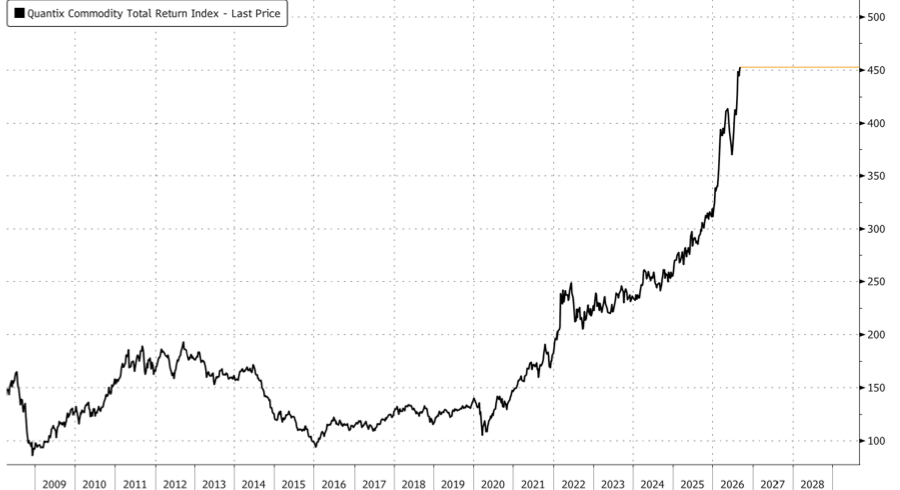
... while the Quantix Commodity Index has hit a new record high.

Bloxham told clients to focus on these ten themes:

1) A'super-squeeze' continues …

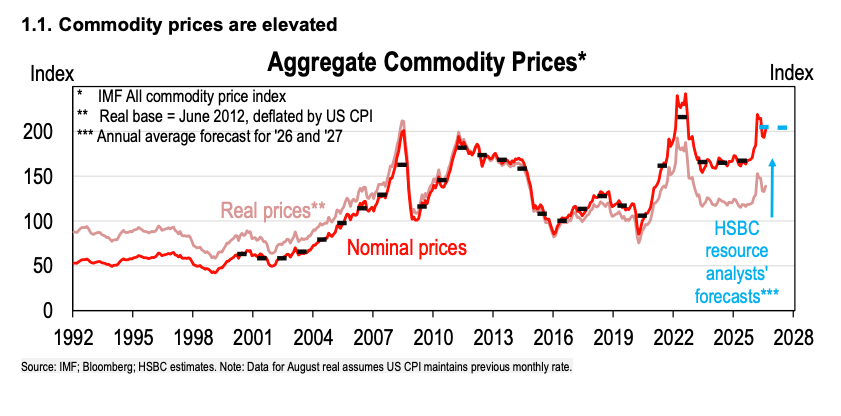
Six months after the Middle East conflict began, it is still a key driver of commodity prices. Commodity prices are well above the pre-Iran war levels, despite being below the peaks reached early in the conflict. The worst-case possibilities have, so far, been avoided, largely because of rapid drawdown of inventories, but the global commodity price index is up 18% YTD and 24% y-o-y in August. The team's base case sees an average rise of 22% in 2026 (16% prior) and flat in 2027 (-7% prior), leaving our 2027 forecast 14% higher than previously expected. 

We see risks to these forecasts being to the upside as the 'super-squeeze' continues.

2) … with disruption from the Iran and Russia-Ukraine wars …

The Middle East conflict remains the key risk. The Strait of Hormuz remains largely closed, with significant uncertainties about when it will open and on what terms. A cycle of escalation and de-escalation of the conflict has been repeated many times in recent months, driving volatility. The Middle East conflict has also broadened, with attacks by the Houthis on Saudi ships in the Red Sea disrupting traffic though the Bab el-Mandeb Strait too. In addition, the Russia-Ukraine war, which is now in its fifth year, has been a more acutely disruptive force recently, including for supplies of grains and refined oil products, like diesel.

3) … and a strong El Niño weather event

Extreme weather is another upside risk to prices. A strong El Niño has arrived, with the Southern Oscillation Index already at extremes not reached in over two decades. This is a particular risk for agricultural supply, where the Middle East conflict has already disrupted fertiliser and diesel supplies and the Russia-Ukraine war has disrupted shipping. A recent Northern Hemisphere heatwave has also shifted patterns in energy consumption with implications for stocks of key energy commodities. El Niño is also affecting manufacturing supply chains, and thereby impacting commodity markets. 

4) Inventory rundown in focus, particularly for oil and gas

High inventories and rapid drawdown of these inventories - particularly of oil and gas - has been a key factor helping to, so far, balance markets in the face of the 'super-squeeze'. In the oil market, the US has been exporting more - as it runs down its strategic reserves - and China has been importing much less - as it too runs down reserves. However, the longer the disruptions continue, the greater the upside risk to prices, as stocks fall to levels that start to approach 'tank bottom'. For gas, European inventories are well below target, reflecting a very hot summer, with lower stocks increasing the risk of high prices in the coming winter.

5) More than just oil - sulphur, diesel and jet fuel disrupted too

The supply disruptions, particularly due to the Middle East conflict, extend well beyond oil and gas. In particular, there have been significant disruptions to supplies of sulphur, fertiliser, aluminium and helium -- as well as a range of refined oil byproducts, such as jet fuel, naphtha and diesel. The Russia-Ukraine war has more acutely affected supplies of products such as diesel, as the conflict has led to recent significant damage to refining capacity.

6) Metals and energy prices supported by AI and electrification

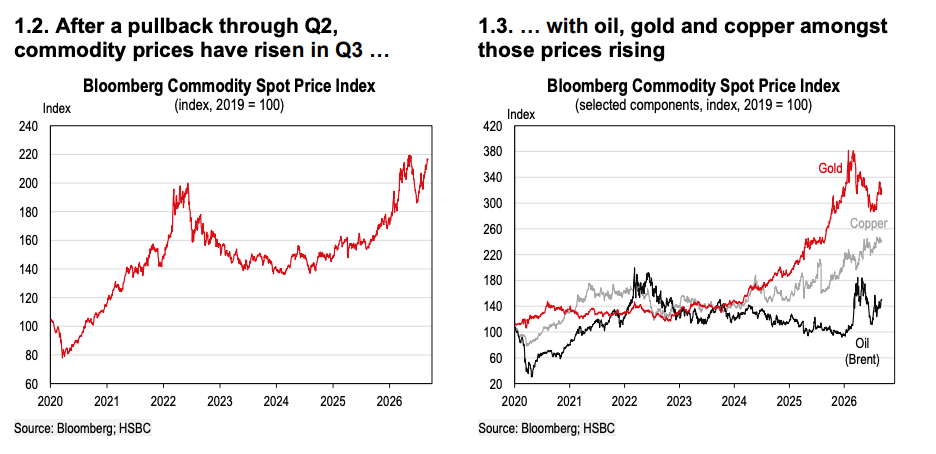
Most base metal prices have risen recently, as the boom in AI infrastructure investment and the energy transition have supported electrification demand. Copper prices have increased to all-time highs, partly reflecting strong demand, but also limited investment in new mines constraining supply and supply disruptions. For aluminium, although the Middle East conflict has been disruptive, China dominates global supply and some cargoes have cleared the Strait of Hormuz, containing the upside to prices. Lithium prices have also risen strongly over the past year, up 130%, but as with previous cycles, this has triggered more supply, particularly from Zimbabwe and Australia, which could curb the price upside.

7) China's slowdown weighs on bulk commodities

Despite good support for base metals from the AI and electrification booms, falling fixed asset investment in China, particularly the ongoing property correction, which is now in its fifth year, has weighed on demand for iron ore, coking coal and steel. That being said, this year China's authorities announced more infrastructure investment plans, worth around RMB7 trillion, as part of the 'Six Networks' initiative, which should support demand for bulk commodities and their prices. For iron ore, on the supply side, there have been large changes to pricing as the China Mineral Resources Group (CMRG) centralised Chinese buying and the ramp-up in production from the Simandou mine in Guinea adds in more supply.

8) Grains and 'finer foods' prices rise, as supply squeezed

Agricultural markets have been heavily affected by the disruptive impacts of the Middle East and Russia-Ukraine wars, particularly to supplies of fertilisers and diesel. The El Niño event, Northern hemisphere heatwave and record high ocean temperatures (a positive Indian dipole) are all risks to the outlook for supplies. An El Niño event creates more volatility in agricultural prices, by disrupting supply. Winners are typically North and South America, with much of Asia typically worse off, with higher drought risk in Australia and Indonesia, a weaker monsoon in India and hotter and drier conditions in South-East Asia. Grains prices have been rising recently, led by wheat, and 'finer foods' prices are rising too - particularly cocoa and coffee.

9) Precious metal prices are high and we see more upside

After a significant rise in precious metals prices through 2025 - gold prices more than doubled to their peak in January 2026 - prices have edged lower across the precious metals complex year-to-date in 2026. A key driver has been a rise in interest rates - particularly at the long-end of yield curves - which has encouraged investors to seek yield and thus move away from precious metals. That being said, with geopolitical risk still high, central bank demand still positive, and more uncertainty in bond markets, precious metals prices are well supported. Platinum and palladium prices may also be supported by constrained mine supply.

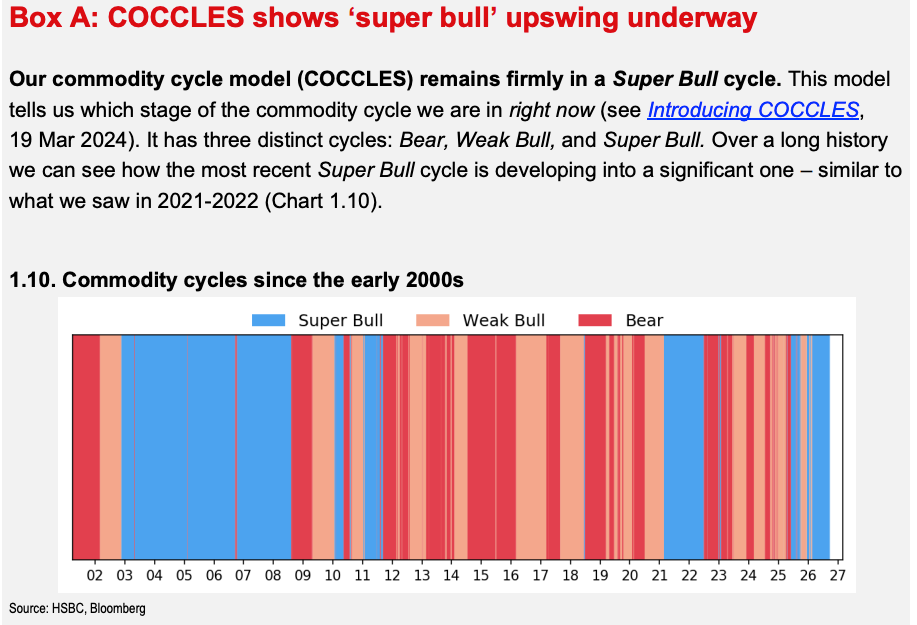
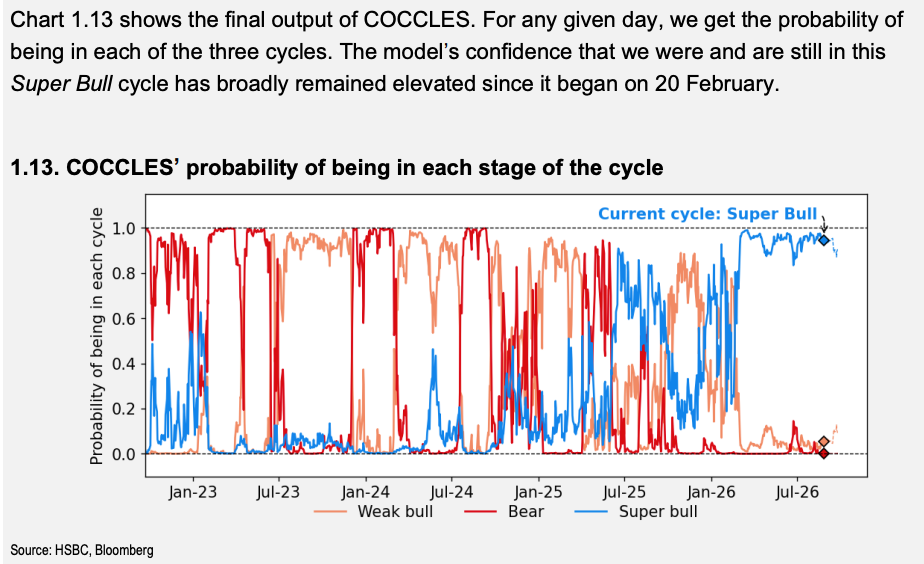
10) COCCLES suggests a 'super-bull' phase underway

Finally, HSBC's purely statistical model, COCCLES, which looks for patterns in commodity prices, shows that the market is convincingly in a 'super-bull' phase of the cycle.

This model is not structural, but it does tend to be the case that once a super-bull phase begins, it tends to persist much longer than the other phases do. 

This model result lends statistical support to the view that commodity prices will remain elevated. 

With HSBC's commodity-cycle model firmly signaling a "super-bull" phase, the big question for traders now is how long physical scarcity themes and other supply constraints can collide with demand to sustain the rally. 

Tyler Durden Thu, 09/10/2026 - 06:55

US-Saudi Nuclear Deal Clears Vienna Hurdle As Congress Review Continues

US-Saudi Nuclear Deal Clears Vienna Hurdle As Congress Review Continues

Authored by Michael Kern via OilPrice.com,

  • IAEA chief Rafael Grossi says Saudi Arabia won't sign the Additional Protocol but will accept oversight powers over enrichment, conversion and reprocessing that closely mirror it.

  • The underlying US-Saudi 123 agreement, signed July 22, opens a path to domestic uranium enrichment after a two-year study, a break from the UAE's enrichment-free 'gold standard.'

  • Congress is 90 days into reviewing the deal, with Democrats and nonproliferation groups pushing back and two side letters still classified.

A planned nuclear cooperation deal between the United States and Saudi Arabia won't include the toughest inspection regime the U.N.'s atomic watchdog has to offer, but it's going to come close on the activities that matter most.

That's the picture International Atomic Energy Agency chief Rafael Grossi laid out Monday in Vienna, speaking to reporters during the agency's September Board of Governors meeting. Riyadh isn't signing the IAEA's Additional Protocol, the tool that lets inspectors show up unannounced at sites a country hasn't even declared. But Grossi said Saudi Arabia is preparing to grant the agency verification and monitoring authority over its most sensitive nuclear activities, uranium enrichment, the conversion step that precedes it, and reprocessing, that functions almost the same way.

"These are sensitive activities, as we all know," Grossi told reporters. The new powers being built into the bilateral safeguards agreement, he said, will be "very, very similar" to what the Additional Protocol provides, though he declined to spell out specifics. Once finished, that safeguards agreement still has to go before the IAEA's own 35-member Board of Governors for sign-off.

A Deal Years In The Making

The framework goes back to a 123 agreement that Energy Secretary Chris Wright and Saudi Energy Minister Prince Abdulaziz bin Salman signed on July 22, capping more than a decade of on-and-off talks that repeatedly stalled over Riyadh's refusal to give up enrichment as a condition of U.S. cooperation. The pact, named for the section of the Atomic Energy Act that governs U.S. nuclear exports, opens the door for American firms to build reactors in the kingdom and hands Riyadh something it has wanted for years: a real shot at enriching its own uranium.

Under the terms reported at signing, Washington and Riyadh have two years to study whether domestic enrichment makes commercial sense. Any enrichment plant built afterward would go up under a "black box" model, run by U.S. companies inside Saudi Arabia so the underlying technology never actually changes hands. It's a sharp departure from Washington's 2009 pact with the United Arab Emirates, the deal nonproliferation advocates still call the gold standard, under which Abu Dhabi permanently gave up enrichment and reprocessing altogether.

Congress Gets Its Say

The administration sent the agreement to Congress in late August, starting a 90-day review clock under the Atomic Energy Act. Lawmakers can let it take effect by doing nothing, or pass a joint resolution of disapproval to kill it, though that would need to survive a presidential veto. Two side letters attached to the deal remain classified, according to the Foundation for Defense of Democracies, which also notes that of the 51 countries with active 123 agreements, only Argentina and Brazil currently lack the Additional Protocol. Saudi Arabia would be the third.

Congressional Democrats have pushed back hard, joined by some Republicans, arguing the deal opens the door to a wider enrichment race across the Middle East. The White House, meanwhile, has tied the agreement to Saudi Arabia eventually joining the Abraham Accords and normalizing relations with Israel, a step Riyadh has so far declined to take without progress toward Palestinian statehood.

The Backdrop

For Riyadh, the deal is also part of a broader push under Vision 2030 to build out nuclear power alongside renewables and diversify an economy still tied to oil exports, with U.S. firms like Westinghouse positioned to compete for reactor contracts worth billions. The talks are unfolding against last year's war between Israel and Iran, which has hardened Gulf calculations around nuclear deterrence. Crown Prince Mohammed bin Salman has said publicly the kingdom would pursue a weapon of its own if Iran ever built one. Iran, for its part, operated under the Additional Protocol from 2016 to 2021 under the nuclear deal that collapsed after the U.S. withdrew in 2018, a history nonproliferation groups keep pointing to as they push for tougher terms on Riyadh.

For now, the deal sits in a kind of holding pattern. Congress's review runs deep into the fall. The bilateral safeguards text is still being finalized in Vienna. And whether the arrangement Grossi described Monday ends up satisfying skeptics on Capitol Hill, or just gives them a new set of details to pick apart, is still an open question.

Tyler Durden Thu, 09/10/2026 - 06:30

Migrants Responsible For 47% Of All Violent Crime In German State Of Bavaria

Migrants Responsible For 47% Of All Violent Crime In German State Of Bavaria

Via Remix News,

Non-German suspects account for nearly half of all violent crime in the German state of Bavaria, with the anti-immigration Alternative for Germany (AfD) party now calling for remigration for all criminal migrant suspects. The Interior Ministry data was released in response to a request from AfD state parliament member Martin Böhm. It revealed that police recorded 20,367 suspects in violent offenses in 2025 and about 47 percent did not have German citizenship.

Remarkably, foreigners are responsible for this massive amount of serious crime despite making up only 15.5 percent of Bavaria's population.

Syrians were the largest group of non-German suspects, at 1,284, followed by Turks with 799, Ukrainians with 797, Afghans with 784, Romanians with 687, Iraqis with 428, Bulgarians with 350, Poles with 328, Kosovars with 319, and Italians with 250.

A different ranking appears when the figures are adjusted for population. The suspect burden figure, or TVBZ, measures how many suspects police identified per 100,000 people in a group over one year.

Ukrainians had the highest TVBZ, at 555. Turks followed at 445 and Romanians at 435. The figure for German citizens was 106. That means Ukrainians, for instance, are more than five times more likely to commit a violent crime than Germans.

The government did not calculate a TVBZ for other nationalities because each had fewer than 100,000 residents.

"For smaller population groups, the crime rate would have to be mathematically extrapolated to 100,000 people," the state government wrote.

"However, since the relationship between population size and crime burden is not strictly linear, an error would occur in the TVBZ calculation, which is greater the smaller the population group. For this reason, the TVBZ are only calculated for non-German citizens who have a population share of over 100,000 people."

When it comes to murder and manslaughter, there were 411 suspects in Bavaria and 177 were non-Germans, equaling 43.1 percent of all murder and manslaughter suspects. The TVBZ for Germans was 87, while Turks had a TVBZ of 478 and Ukrainians with a TVBZ of 499.

In cases of rape, sexual assault and sexual assault in particularly serious cases, including those resulting in death, police registered 1,288 suspects in Bavaria. Of those, 551 were foreigners, equaling 42.8 percent.

It must also be noted that for all German suspects counted in this data, the Interior Ministry does not release if they have a foreign background.

Böhm said the figures show that violent crime in Bavaria is an imported problem to a "far too high" extent.

"No amount of sugarcoating or trivialization will help. The numbers speak for themselves," he told Junge Freiheit, which exclusively received the figures.

"The AfD therefore demands: decisive action by the judiciary, an end to mass naturalizations and rigorous remigration of foreign violent criminals," Böhm said.

Read more here...

Tyler Durden Thu, 09/10/2026 - 05:00

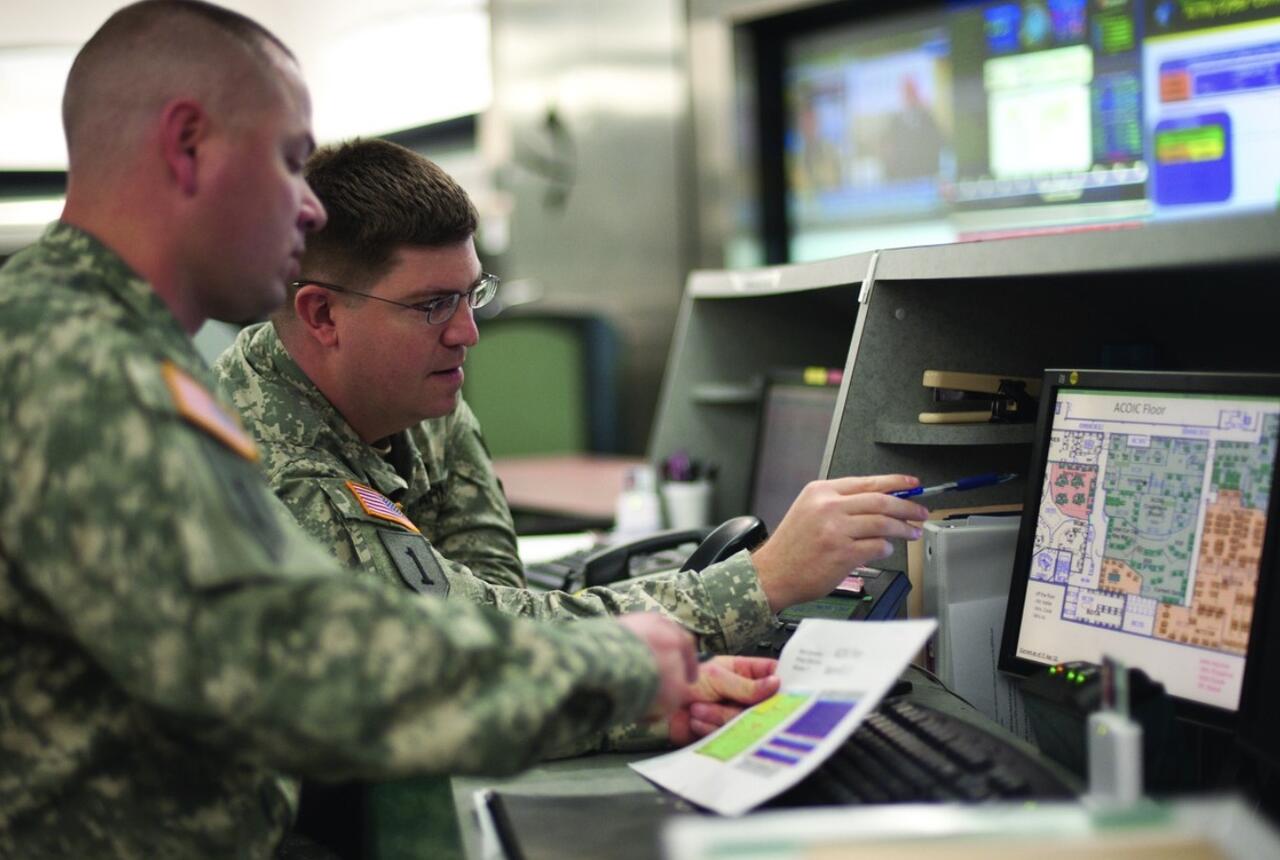
America's Next Military Contractors Could Be Hackers

America's Next Military Contractors Could Be Hackers

Washington may soon outsource part of its cyberwarfare operations to private companies, according to a new report from Bloomberg

Language tucked into the Senate’s 2027 defense bill would create a pilot program allowing the Pentagon to hire outside cybersecurity firms to penetrate computer networks chosen by the US military. Contractors would operate under US Cyber Command and Pentagon supervision.

Bloomberg writes that the authority would initially be relatively narrow. Private operators could establish access to targeted networks, but the Senate language stops short of authorizing them to damage, disable or destroy those systems.

Still, it would represent a significant expansion of private industry’s role in US offensive cyber operations. The administration has already moved in this direction, launching a separate initiative that permits American companies to pursue certain foreign cybercriminal groups under federal oversight.

Advocates say outsourcing some of the work could provide badly needed manpower and expertise as Cyber Command faces growing demands and staffing pressures. Opponents argue that introducing profit-driven companies into cyberwarfare could create new problems, including retaliation, accidental escalation and murky accountability.

If enacted, the experiment would start in 2027 and continue through 2030, with the Pentagon required to regularly disclose information about contractors, missions and targets to Congress.

For now, however, it remains only a Senate proposal. The House defense bill contains no equivalent measure, meaning the provision could still be changed or removed before reaching the president.

Tyler Durden Thu, 09/10/2026 - 04:15

"Really Bright Future": Wall Street's Big Bet on Booming Red America Escalates

"Really Bright Future": Wall Street's Big Bet on Booming Red America Escalates

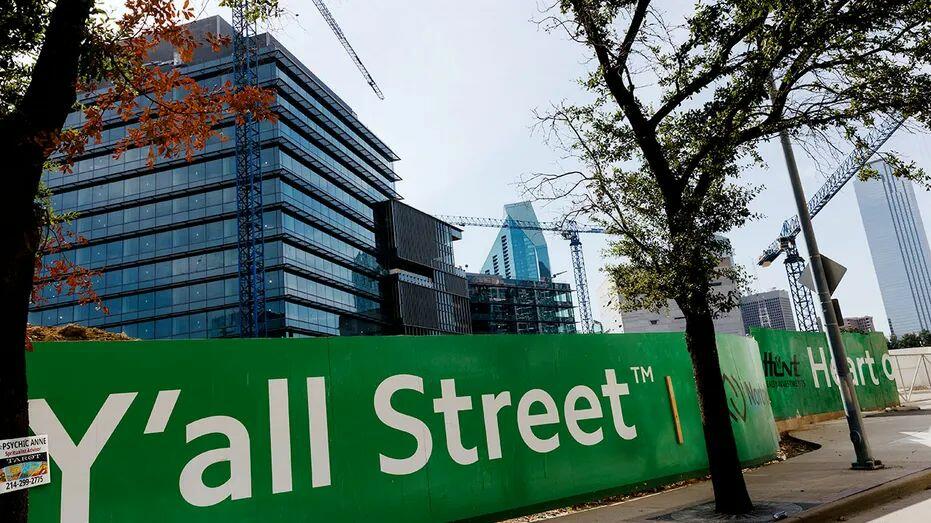
Goldman Sachs is nearing a major milestone on its new Dallas campus, where the exterior of an 800,000-square-foot building is nearly complete and the Wall Street firm is preparing to begin work on the interior ahead of a planned January 2028 opening.

The new Goldman Sachs campus in downtown Dallas is under construction, with a projected opening in January 2028. (Shelby Tauber via Getty Images, yoinked from Fox News)

The project will consolidate two existing Goldman offices into a single campus and give the firm more room to expand in a city that is already its second-largest U.S. base after New York, with roughly 4,500 employees across North Texas. The roughly $500 million campus is designed for more than 5,000 workers and will be the largest office by square footage in Goldman's portfolio when it opens - larger than anything the firm occupies in Manhattan. Ericka Leslie, Goldman's chief administrative officer, recently inspected the site and said Dallas has so far lived up to the firm's expectations.

"I can't say it enough, I think Dallas is a great place to do business, it really is. The building is beautiful," Leslie told Fox Business.

"We're in two buildings now, we're going to be able to combine everybody into this state-of-the-art space, and it's right next to the Perot museum, and the city itself is very vibrant. So we're looking forward to it, and we're going to grow there," the Wall Street executive continued. "It's a growth opportunity for us inside of the United States, and it's a really vibrant place to do business."

"The outside of the building is mostly complete, and they have to do that in order to start fitting out the inside of the building and air conditioning it, so that will begin fairly shortly. We're looking for a launch around January 2028," she added.

The new campus will offer views overlooking downtown Dallas and the Perot Museum, including from outdoor areas. (Goldman Sachs)

However, January 2028 is running a little late versus Goldman's original plan. Dallas is so busy building that even Goldman has to wait in line for contractors.

"The project is mostly on time. It's slightly delayed, there's quite a bit of development going on in Dallas right now, and so we're seeing small delays," she said.

The math behind the move is straightforward. CEO David Solomon has noted that Goldman's headcount in New York has not grown in 20 years, while Dallas and Salt Lake City are where the firm is adding people.

Goldman is hardly alone in putting more people and money into Texas. Some of the biggest names in finance are expanding their presence in the state, adding offices and employees as Texas seeks to establish itself as a larger rival to traditional financial centers on the East Coast.

For example, Morgan Stanley is planning a permanent Dallas hub by 2031. Under a July 2026 resolution filed with the Dallas City Council, the firm plans to spend just over $587 million on a 708,000-square-foot building expected to house about 3,800 employees by the end of 2035. At least 25% of relocated or newly created positions are required to go to Dallas residents. That works out to roughly $829 per square foot, against about $625 for Goldman's campus.

The new Goldman Sachs campus in Dallas will allow the firm to consolidate and grow its presence in the region. (Goldman Sachs)
Texas is also making a push into the infrastructure of financial markets themselves. The Texas Stock Exchange, backed by BlackRock, Citadel Securities, Charles Schwab and Goldman itself, raised $161 million, making it the most well-capitalized exchange applicant in U.S. history. The exchange went fully live in late July.

Meanwhile, Apollo Global Management is expanding farther south in Austin, which the firm selected for a new hub focused on innovation, emerging technology and its next phase of growth.

"At Apollo and Athene, we help meet the capital needs of companies and economies, while enabling people to retire with confidence. That mission has driven our innovation for more than three decades, and this new presence is a continuation of that DNA. Change is the only constant, and we'd rather lead it than react to it," Apollo CEO Marc Rowan said. "Austin lets us build the next generation of Apollo and Athene, including challenger models for parts of our own business, with the talent, technology and business environment already in place. That's why we chose Austin and Texas."

Tyler Durden Wed, 09/09/2026 - 20:30

University Of Washington Settles Case Against Professor Disciplined For Mocking Land Acknowledgment

University Of Washington Settles Case Against Professor Disciplined For Mocking Land Acknowledgment

Authored by Jonathan Turley via JonathanTurley.org,

Land acknowledgments have become standard at academic and political events, including the opening of the Obama Presidential Library and a recent Michigan Democratic event. While supporters insist it merely shows respect for original inhabitants, critics argue it is the ultimate virtue signaling and is increasingly being forced on both speakers and audiences. One critic is Professor Stuart Reges, who teaches at the computer science and engineering school of the University of Washington. He has now received a settlement from the University of Washington, which spent a significant amount of time and resources in response to his mocking of the school's land acknowledgment.

University of Washington

We previously discussed the case of Professor Reges, who was disciplined because he refused to post the school's "land acknowledgment" and instead posted an alternative statement. Professor Reges sued the university and various officials in 2022. Professor Reges has declared "Land acknowledgments are performative acts of conformity that should be resisted, even if it lands you in court."

The defendants included Nancy Allbritton, the Dean of the College of Engineering at the University of Washington, Magdalena Balazinska, Director of the Allen School, UW President Ana Mari Cauce, and the Allen School's Vice Director Dan Grossman.

After the university encouraged faculty to add a prewritten "Indigenous land acknowledgment" statement to their syllabi, Reges decided to write his own statement. He has now been told that, while the university statement is optional, his statement is unacceptable because it questions the indigenous land claim of the Coast Salish people.

The school provided a recommended statement for all faculty to post and/or read to their students at the first of every course:

"The University of Washington acknowledges the Coast Salish peoples of this land, the land which touches the shared waters of all tribes and bands within the Suquamish, Tulalip and Muckleshoot nations."

Professor Reges disagreed with that statement and expressed his doubts to the faculty while also noting that "Magda" did not want the faculty to discuss such reservations on the email system. That may refer to the Director of the Paul G. Allen School of Computer Science & Engineering, Magdalena Balazinska.

Reges' alternative statement read:

"I acknowledge that by the labor theory of property the Coast Salish people can claim historical ownership of almost none of the land currently occupied by the University of Washington."

The labor theory (which I teach) generally refers to John Locke's theory. In his Second Treatise, Locke laid the foundation for property as a divine gift of God that began in the state of nature, where all was created in common by God. Reges declared that these tribes, indigenous people, "can claim historical ownership of almost none of the land and that the claim of the university land was not sufficiently used or developed to bestow a claim upon the Coast Salish people. That acknowledged group is a broad collection of different groups with ethnic or linguistic associations."

In his lawsuit, Professor Reges says that, after he stated his own views, the university moved against him.

"On January 4, 2022, the day after Professor Reges's Computer Science and Engineering 143 class met for the first time, Defendant [Magdalena] Balazinska, Director of the Allen School, sent Professor Reges an email ordering him to remove the statement from his syllabus because it was 'offensive' and created a 'toxic environment.'"

Reges noted that the university allowed other professors "to include modified statements in their syllabi that were more consistent with the University's recommended statement." The operative point is that "other faculty at the Allen School continue to include land acknowledgment statements in their syllabi that differ from the University's own statement, so long as they express a viewpoint consistent with the University's recommended version."

According to the complaint, Balazinska then allegedly removed his dissenting statement, and the university emailed his students to apologize for their professor's "offensive" land acknowledgment opinion and advised them on "three ways students could file complaints against" him. The students were later allegedly told by Balazinska that, according to the complaint, "all students in Professor Reges's Computer Science and Engineering 143 class section [can] switch into a new 'shadow' class section, which would meet at the same time as Professor Reges's class section."

Reges notes that the alternative class was a series of recorded lectures, but viewed as a reasonable alternative to being in a class with a professor with a dissenting view on land acknowledgments. Some 170 out of his 500 students took the alternative course.

I previously wrote how universities can use course assignments and other collateral means to isolate dissenting professors in an effort to get them to resign. This is especially true of tenured faculty.

I wrote that:

The Reges case could prove a major challenge to that orthodoxy. All university faculty should have condemned the university's actions as an attack on academic freedom and freedom of speech, regardless of how they feel about land acknowledgment. The silence, however, is a reflection of how much has changed in higher education."

It has now resulted in a $600,000 settlement after the university spent massive amounts of public money over four years to fight this lawsuit over the abusive treatment of Professor Reges.

The university settled only after the United States Court of Appeals for the Ninth Circuit ruled in December that administrators were "liable under the First Amendment for retaliation and viewpoint discrimination."

Unfortunately, there is no indication that the university officials who created this fiasco will be held accountable in any way. Millions were spent, and years of litigation were triggered by the orthodoxy of the university. However, these officials will likely be heralded by their colleagues, and nothing is likely to change in the University of Washington's intellectual echo chamber.

However, according to FIRE, the settlement "stipulates that the university cannot take any further action against Reges."

Congratulations to Professor Reges and FIRE for a well-fought case with potentially lasting implications in protecting free speech and academic freedom.

Tyler Durden Wed, 09/09/2026 - 20:05

Appeals Court Blocks IRS From Sharing Data With Immigration Authorities

Appeals Court Blocks IRS From Sharing Data With Immigration Authorities

Authored by Zachary Stieber via The Epoch Times,

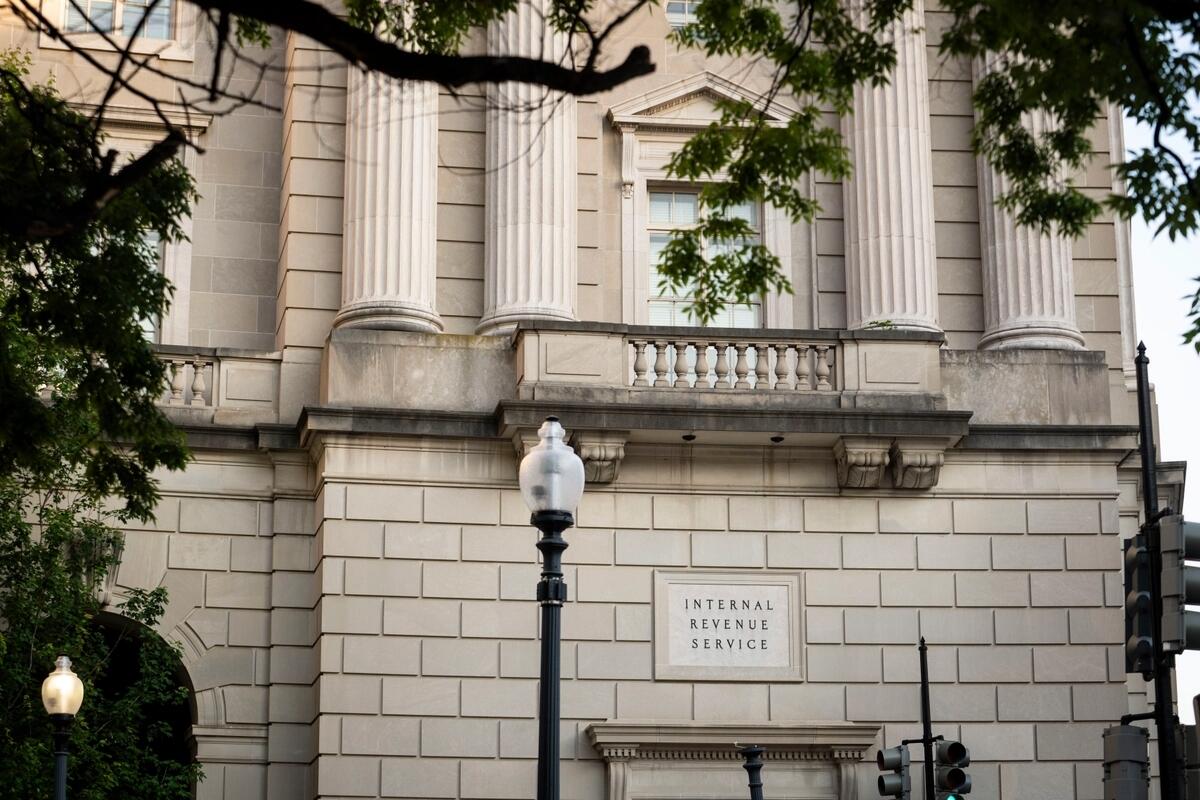
The IRS may not disclose the addresses of illegal immigrants to immigration officials, a U.S. appeals court said on Sept. 8.

A three-judge panel of the U.S. Court of Appeals for the District of Columbia Circuit upheld a February ruling from a district court that deemed an IRS policy to share the addresses of tens of thousands of people with Immigration and Customs Enforcement (ICE) illegal in part because the policy failed to meet requirements in the law.

The unanimous panel agreed, rejecting arguments from the government to the contrary.

The policy "indisputably contravenes the requirements of section 6103," a law that governs when the IRS can share taxpayer information, Circuit Judge Cornelia Pillard wrote for the panel.

The law allows the IRS to disclose certain tax return information to other federal agencies for use in criminal investigations. To make a request, the head of the agency needs to identify the taxpayer by name and address, specify the relevant tax period, and explain why the information may be relevant to the probe.

Under a memorandum of understanding signed in April 2025 between the IRS and ICE, the latter asked for the last known address for more than 1 million people believed to be illegally present in the United States. ICE did not provide an address for some of the people on the list. Under the agreement, IRS workers sent 47,289 records to ICE before the district court stayed the process.

IRS officials requested the appeals court overturn the ruling. Government lawyers said that the groups that sued did not have standing, that the IRS did not have to follow procedures in the Administrative Procedure Act because the agreement was not a final agency action, and that the practice did not violate federal law.

Pillard wrote that at least one of the plaintiff organizations was sufficiently injured by the policy that it could bring suit, that the IRS did have to follow the procedures because the policy was a final action, and that the action violated federal law because ICE in some cases did not supply an address, as required by the law.

The law provides that the IRS can disclose information about a taxpayer to officials "personally and directly engaged" in criminal proceedings or investigations concerning that taxpayer, allowing disclosure as long as the field for the ICE point of contact is filled in, even if it said "unknown" or "to be determined."

ICE ended up putting the same person as the point of contact for each of the 1.28 million listed taxpayers for whom it requested information.

The judicial panel found that the government's practice "entirely fails to ensure that ICE lists a federal employee, let alone one 'personally and directly engaged' in a qualifying investigation of a particular taxpayer."

"Today's order is a resounding victory for the protection of all taxpayers' right to the confidentiality of their tax information in the hands of the IRS," Nina Olson, executive director of the Center for Taxpayer Rights, one of the groups that sued over the policy, said in a statement.

A spokesperson for the Department of Homeland Security, ICE's parent agency, told The Epoch Times in an email that the agency disagreed with the ruling.

"We will continue using every lawful tool available to locate and remove illegal aliens with final orders of removal, and this ruling in no way prevents us from doing so," the spokesperson said.

Tyler Durden Wed, 09/09/2026 - 19:15

Japan Is Telling You To Run To Gold

Japan Is Telling You To Run To Gold

Authored by Matthew Piepenburg via Von Greyerz,

Below, we look at lessons from Japan and its latest signals to prepare for a market sell-off, a debasement acceleration and a golden endgame.

Pattern Recognition

My father taught me long ago that the years teach things the days do not always notice.

In all areas of our lives, we slowly acquire perspectives earned by experience over theory and by time rather than guesses.

This is equally true of lives spent investing in markets and cycles. A certain pattern recognition is acquired that not even a Bloomberg terminal or AI robot can teach.

As one, for example, who traded through a dot.com bubble led by the undeniably transformative technology of the internet of all things, I remember well how everyone from Wall Street experts to Hollywood movies made it clear that names like Cisco, Yahoo and AOL were kings who would never be dethroned.

That felt very exciting.

At least until the NASDAQ lost 78% and two of those "kings" were carried off the market on their shields, while Cisco, which at least survived the carnage, would never be the same again.

Those days and years are now teaching us yet another lesson, one whose pattern few wish to see, for the simple reason that many are not, or never were, paying attention.

And as for such patterns or lessons, what very few are seeing today is that Japan's JGB, yen and Nikkei have just given us a familiar road map for what lies ahead for America's Fed, dollar and S&P.

I Think We're Turning Japanese (Yes, I Really Think So)

What is happening this year in Japan goes well beyond the otherwise significant conversations on the Japanese "Carry Trade."

As bond jocks constantly remind us of boring things like sovereign debt yields, it can often be too boring (or too scary) to confront.

Like the sun, topics like death and bond markets are often hard to look at directly.

The fact, for example, that the yield on the Japanese 30Y JGB just hit over 4.18% for the first time in its history may seem like a yawn to many otherwise doom-scrolling through the latest war, AI meme or DC scandal de jour.

But this historical yield spike out of Tokyo is far more than just another bond signal - it's a harbinger of things to come in your own backyard (and wallet).

The Canary in a Coal Mine

Much like the USA, today's Japan (which is the world's 3rd largest economy) is a paper tiger built on extraordinary debt (greater than 200% of its total economy) and a bond and hence stock market entirely supported by (and correlated to) a central bank fatally addicted to printing (debasing) trillions worth of its currency to keep its illusion of economic survival going.

If this profile looks a lot like America's and Europe's, that's because Japan is just a canary in the Western coal mine. Where it goes, we shall follow.

In fact, Japan's sins are in many ways our own, especially America's.

Blame It on the Experts

Just after the Nikkei literally died in 1989, a then-ambitious and much younger Ben Bernanke gave Tokyo a handbook to print their way out of collapse.

Bernanke would use a similar handbook when U.S. markets tanked years later in 2008. As we are now discovering, his expertise was anything but expert.

But during this period of mass MMT delusion and massive currency debasement, Wall Street was betting for years (decades) that Japan's debt levels would eventually implode under inevitably rising bond yields (and hence debt costs).

For literally decades, Wall Street mavericks were betting big on a yield spike that would re-crush the Nikkei and JGB in one big headline.

But this headline never came, and the foregoing bet against Japan became known on the Street as the "widow maker."

Buying Time, Postponing Pain

Instead, the BoJ bought itself decades of time and a market recovery by printing just unthinkable levels of yen to keep JGBs (Japanese bonds) bought and the Nikkei higher.

For the near entirety of my career, this kept Japanese yields at zero to negative, buying time while crushing those who bet against Tokyo.

Which brings me back to that boring 4.18% record yield on the 30Y JGB.

This figure confirms that the dam has finally broken on the broken Japanese "plan."

Or to use the analogy above, the canary in its coal mine just died.

For those paying attention, these rising yields just caused the Nikkei 225 to lose 200B in a single day, and this sell-off was led by the so-called "Immortal" tech kings, you know, the kind which were never supposed to fall - like AOL, Yahoo or Cisco of old.

The Sickness is Global and Currency-Killing

But what happens in Tokyo doesn't stay in Tokyo.

Yields across the "developed" world have been rising to decade highs because the bond markets are now showing more honesty than central bankers, from Tokyo to DC.

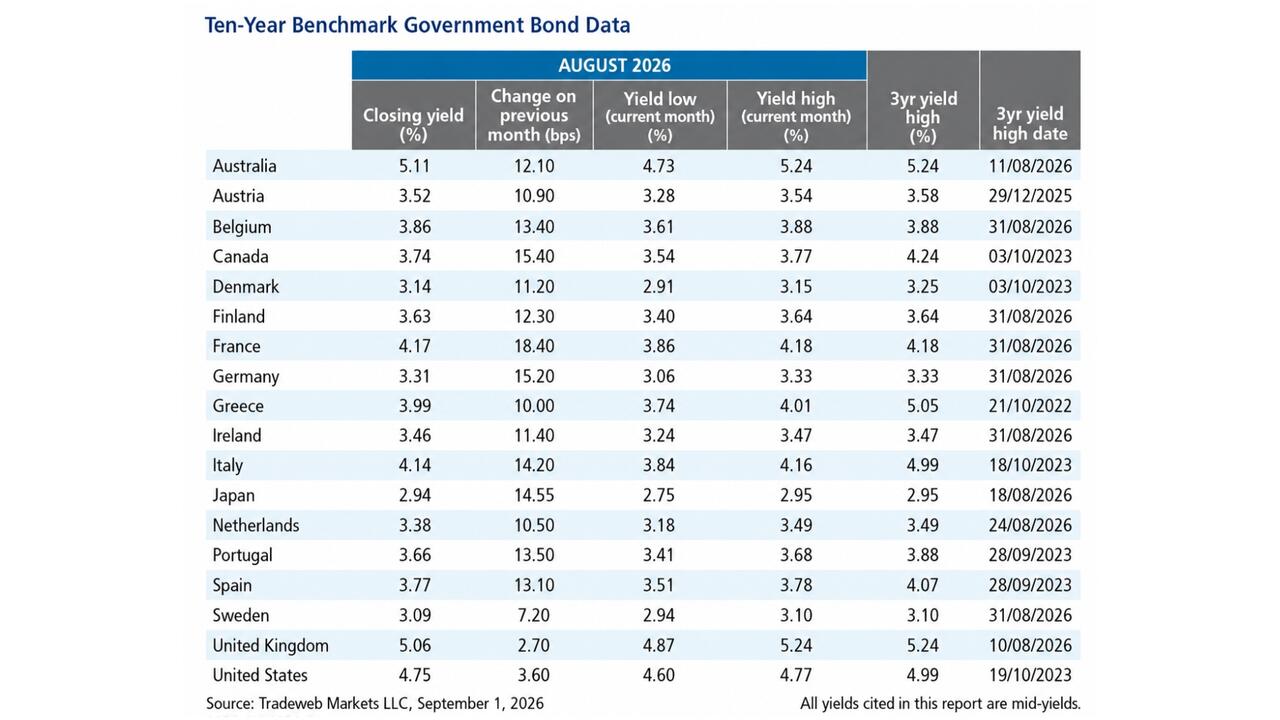
As the yield on the Bloomberg Global Sovereign Bond Index shoots past 3.72%, yields from Australia and the UK to Germany and the USA are skyrocketing to untenable levels.

The bond market is essentially asking for more risk premium (yield) on government IOUs that are no longer trusted.

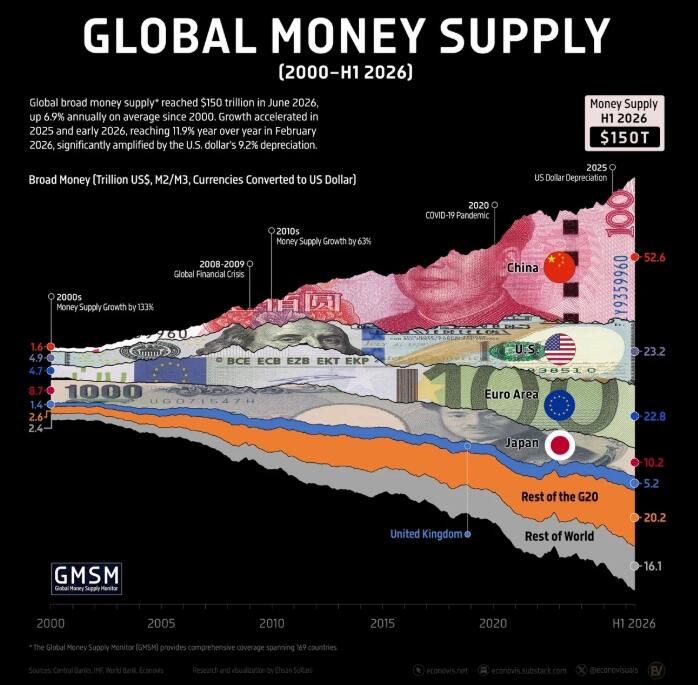
Given this global debt fiasco, is it therefore any surprise that the global broad money supply of printed paper currencies, which hit $150 TRILLION in June, has increased by a staggering 50% since 2020?

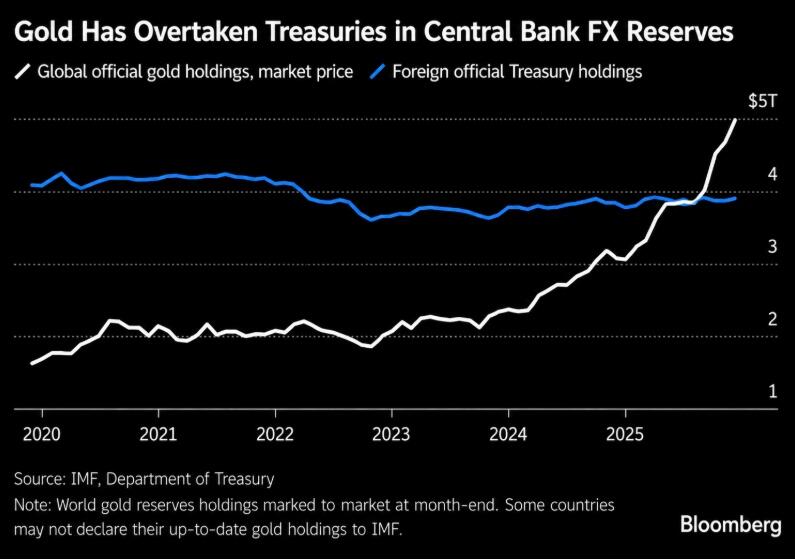
Such open currency debasement now hiding in plain sight not only explains why currencies like the USD have lost 87% in absolute purchasing power since decoupling from gold in 1971, it further explains why the world's central banks are stacking gold at an unprecedented pace in 2026.

Physical gold is no longer an allocation or dollar "debate"; it is the open and now obvious puck direction of global collateral and the de facto international reserve asset above tanking currencies and unloved sovereign IOUs.

This is not fable but fact.

Stocks vs. Gold

But equally worth noting from the Japanese tech sell-off of late is what it reminds as to the dot.com era of yesterday and what it portends for the AI era/market of tomorrow.

Unlike the aforementioned bloodbath during the internet bubble, today's U.S. stock market is literally being kept alive by an equally game-changing technology meme with an even greater profile of over-investment ($400B this year alone by the leading tech names), which always moves from over-bought to over-sold.

With U.S. public debt crossing 40T as rates rise to levels costing Uncle Sam (i.e. you) over $3B/day to service the interest expense, the convergence of a credit crisis is about to slam into a dying PE market, an already dead private credit market and an over-valued and over-hyped AI sector.

This suggests that what we just got a glimpse of in Japan (as to both its markets and currency) is an undeniable warning of what is to come to the U.S. NASDAQ and dollar.

Be Prepared

Timing this convergence is a mug's game. Preparing for it is not.

Even if central banks like the Fed or BoJ "save" the markets with mouse-clicked trillions, the currency destruction necessary to support those "resilient" markets is robbing you in plain sight.

The Nikkei, for example, has seen an impressive 145% gain in the last five years, yet when measured in gold terms, the result was a net loss of -31%.

During that same period, the NASDAQ 100 has shown an impressive nominal return of 95%, yet when measured in gold, the net result has been a loss of -23%.

And if any of you were being told by your advisors over the last 12 years that USTs were the key to your safe retirement, the "risk-free returns" of Uncle Sam's IOU, when measured against gold, have lost you 90%.

See the theft? See the real measure of wealth?

Given the foregoing interplay of rising rates, tanking bonds, debased currencies and hyper-risk in the tech sector, an allocation to physical rather than paper gold is the only asset separating the informed from the uninformed, and the wealth-protected from the wealth-destroyed.

Tyler Durden Wed, 09/09/2026 - 17:00

Elon Musk's PAC Bets Trans Issue Push Will Drive GOP Voters To The Polls

Elon Musk's PAC Bets Trans Issue Push Will Drive GOP Voters To The Polls

Elon Musk's America PAC has opened its 2026 midterm ad campaign with a barrage of ads centered on trans issues. Musk has reportedly authorized the PAC to spend more than $100 million this cycle and is targeting four Democratic Senate candidates in competitive races: Sherrod Brown in Ohio, Josh Turek in Iowa, James Talarico in Texas and Mary Peltola in Alaska. They are running online and across streaming platforms, marking the first coordinated trans-focused push of the cycle from a major Republican-aligned outside group.

Photograph: Michael Swensen/Getty Images

According to AdImpact, the firm that tracks political ad spending, trans issues have been a minor theme in GOP Senate advertising so far this cycle. America PAC's opening salvo changes that calculus, and it arrives as Republicans navigate a difficult midterm environment, with voters across party lines angry over the Iran war and the high gas prices that have followed it. Economic concerns dominate what voters tell pollsters they want candidates to address. Trans and LGBT issues barely register on those same surveys.

So, why try this now? The answer traces back to the final weeks of the 2024 presidential campaign, when a similar ad devastated Kamala Harris's presidential campaign. Trump's closing spots successfully cast Kamala Harris as out of touch because of her support for taxpayer-funded gender transitions for prison inmates and illegal immigrants, culminating in the line "Kamala is for they/them, President Trump is for you."

Democrats have not disputed the ad's effectiveness, even in hindsight. Quentin Fulks, Harris's principal deputy campaign manager, said after the election that even though trans issues sat "at the bottom for voters," trailing the economy, immigration, crime and inflation in what people actually cared about, the "Kamala is for they/them" line effectively branded Harris as "out of touch."

According to a report from Semafor after the election, Democratic Party allies had expected it to "flop or backfire," but instead, "it inspired more than $215 million of follow-up ads, by multiple campaigns, dividing Democrats and fulfilling the Trump campaign's goal of branding Harris as an out-of-touch progressive."

That explains why America PAC is reaching for the same playbook now, and public opinion data suggests this still can be an effective strategy.

Gallup found in 2025 that 66 percent of Americans want a person's birth sex listed on documents such as passports and driver's licenses, versus 31 percent who favor listing current gender identity. Sixty-nine percent told Gallup they favor requiring transgender athletes to compete on teams matching their biological sex. Pew Research Center found nearly identical numbers on athletics, 66 percent in favor and just 15 percent opposed, with support up 8 points since 2022. A separate Pew survey published Aug. 11, 2026, found 73 percent of respondents uncomfortable, to varying degrees, with transgender athletes competing on teams that do not match their biological sex. On gender transitions for minors, Pew found 56 percent favor making it illegal for health-care professionals to provide gender-transition treatment to people under 18, up 10 points since 2022.

Whether pivoting midterm messaging to the culture war pays off depends on a variable the 2024 campaign did not have to contend with: an electorate frustrated with Republicans over the Iran war and the prices that have followed it. Trans messaging worked in 2024 as an addition to an economic argument that heavily favored Trump. America PAC is banking on it working again in this cycle as a substitute for one.

Tyler Durden Wed, 09/09/2026 - 16:40

"You Better Get Ready For... War": Socialists Call For "War In The Streets" & The End Of Capitalism

"You Better Get Ready For... War": Socialists Call For "War In The Streets" & The End Of Capitalism

Authored by Jonathan Turley via JonathanTurley.org,

"You better get ready for ... war."

Across the country, radicals are openly planning for the next stage of their movement, and notably, the Democratic establishment is not part of their plans.

Despite the talk of a "Big Tent Party," socialists are riding high on a surge of support and talking purges and revolution.

In Chicago, radicals gathered for a conference on Marxism during what many view as the heyday of socialism in the United States. The Democratic Socialists of America is now larger and more powerful than at any time in our history. Socialist candidates are winning elections across the country as Democratic establishment figures from Sen. Chuck Schumer (D., N.Y.) to Gov. Gavin Newsom pander to the movement.

Speakers in Chicago used the conference to push supporters to the next stage in the movement, including some openly calling for violence and the end to capitalism.

University of California Santa Barbara History Professor Butch Ware said Democrats "must be destroyed" and urged attendees to be ready for "war in the streets." Notably, in postings on X, Ware has said that candidates such as New York City Mayor Zohran Mamdani and Senate nominee Abdul El-Sayed are too restrained and are being pushed by the establishment "to contain radicalism."

The professor "of Africa and Islam" whose faculty page is appropriately found under "bware" is the latest radical to dismiss the "Big Tent Party" rhetoric of establishment figures like Schumer. He declared, "The Democrats cannot be reasoned with. They must be destroyed." There is little subtlety in the message, Ware has explained: "You cannot call yourself a revolutionary and not be talking about training with weapons."

It is another example of the delusion that establishment Democrats have that they will be able to use these radicals to destroy their political enemies but not themselves.

After one election victory, socialists chanted "You're Next!" when House Minority Leader Hakeem Jeffries's image came on big-screen televisions.

Hasan Piker has called for a purging of moderates from the Democratic Party.

Just last week, Darializa Avila Chevalier declared, "A big tent doesn't pay your rent, lower your grocery bill, or take on the corporations bleeding our country dry. Democratic socialism does."

In a video posted to X, Professor Ware called for violence, warning followers that "some of these clickety-clack revolutionaries have never been in a f*cking gunfight." He menacingly added, "Y'all ain't nowhere near ready for a war in the streets. You better get ready for both kinds of war if you stay ready, you ain't got to get ready."

This is just the latest example of the type of hate-spewing radical that university departments want to teach in higher education. While purging virtually all Republicans, conservatives, and libertarians from departments, faculty candidates cannot be too radical enough to secure positions on colleges and universities. UCSB pays Professor Ware over $211k to spread this type of lunacy.

Notably, this is the same university that saw a professor lead her students in physically assaulting pro-life advocates on campus years ago. Despite pleading guilty to criminal assault, she was not fired and later honored by the University of Oregon for her inspiring leadership.

In other events around the country such as "Socialism 2026 Conference," City University of New York Professor Ruth Gilmore said in a video, "It's capitalism we're after,...There isn't a capitalism that is somehow not racial. There isn't a capitalism that does not produce and reproduce all kinds of sexual and gender boundaries."

At my alma mater, University of Chicago professor Eman Abdelhadi, the half-sister of Michigan Democratic Senate candidate Abdul El-Sayed, has denounced the university and explained that she is only teaching there to bring down the system.

One year after the massacre, Professor Abdelhadi offered an "October 7th blessing" over an attack that murdered, raped, and tortured innocent men, women, and children. She was previously arrested for spitting on officers.

She added "I hope you know that we have a lot of work ahead of us and that we need each other to do that work. We have an imperative to not just imagine a better future, but to build one together. I'll see you on the streets."

What is so striking is that these radicals are not hiding their agenda or their hostility toward the Democratic Establishment. William Lawrence, who is running for Michigan's 7th Congressional District, previously called for the end of borders, the nation-state, capitalism, and told a leading moderate Democrat to "hurry up and die."

In the meantime, some Democrats are admitting that, after using the socialists to retake power, they will marginalize them in actual governing decisions. Rep. Laura Gillen (D-NY) just explained that they will have to block the "crazy" DSA stuff from actually getting to the floor for a vote.

In Rage and the Republic, I discuss how these Democratic leaders are following the same self-destructive delusions of other establishment figures in history who thought that they could use mobs against their opponents while hoping that they could survive.

Figures like Newsom have even campaigned on denouncing capitalism as "not working" as candidates like Texas Democratic Senatorial candidate James Talarico have called to "dismantle" capitalism. Figures like former Vice President Kamala Harris have dismissed loyalty to our core institutions such as the Supreme Court as mere "nostalgia."

It will not work. These figures are nothing more than "clickety-clack revolutionaries" who convince no one inside or outside the movement. By putting their elections above every other consideration, Democratic leaders are willing to endanger core institutions, values, and even capitalism itself to reacquire power. In so doing, they are embracing the very "mobocracy" that the Founders warned us against in laying the foundations of our constitutional system.

Tyler Durden Wed, 09/09/2026 - 16:20

US Students Still Behind Much Of The World In Math And Reading: Global Assessment

US Students Still Behind Much Of The World In Math And Reading: Global Assessment

Authored by Aaron Gifford via The Epoch Times,

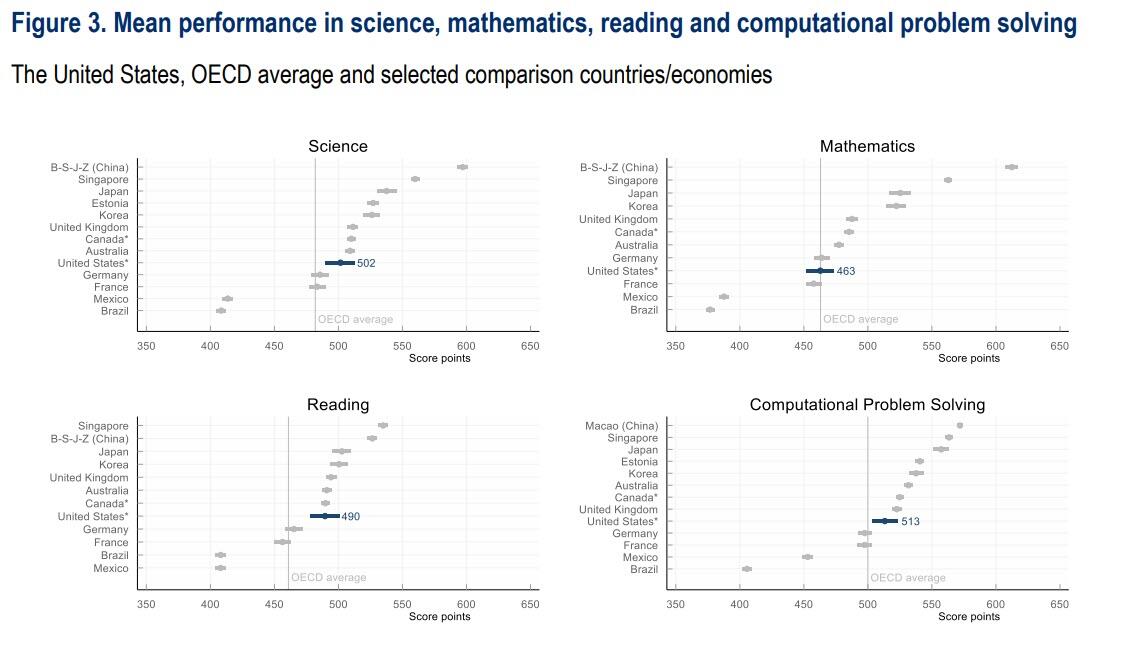
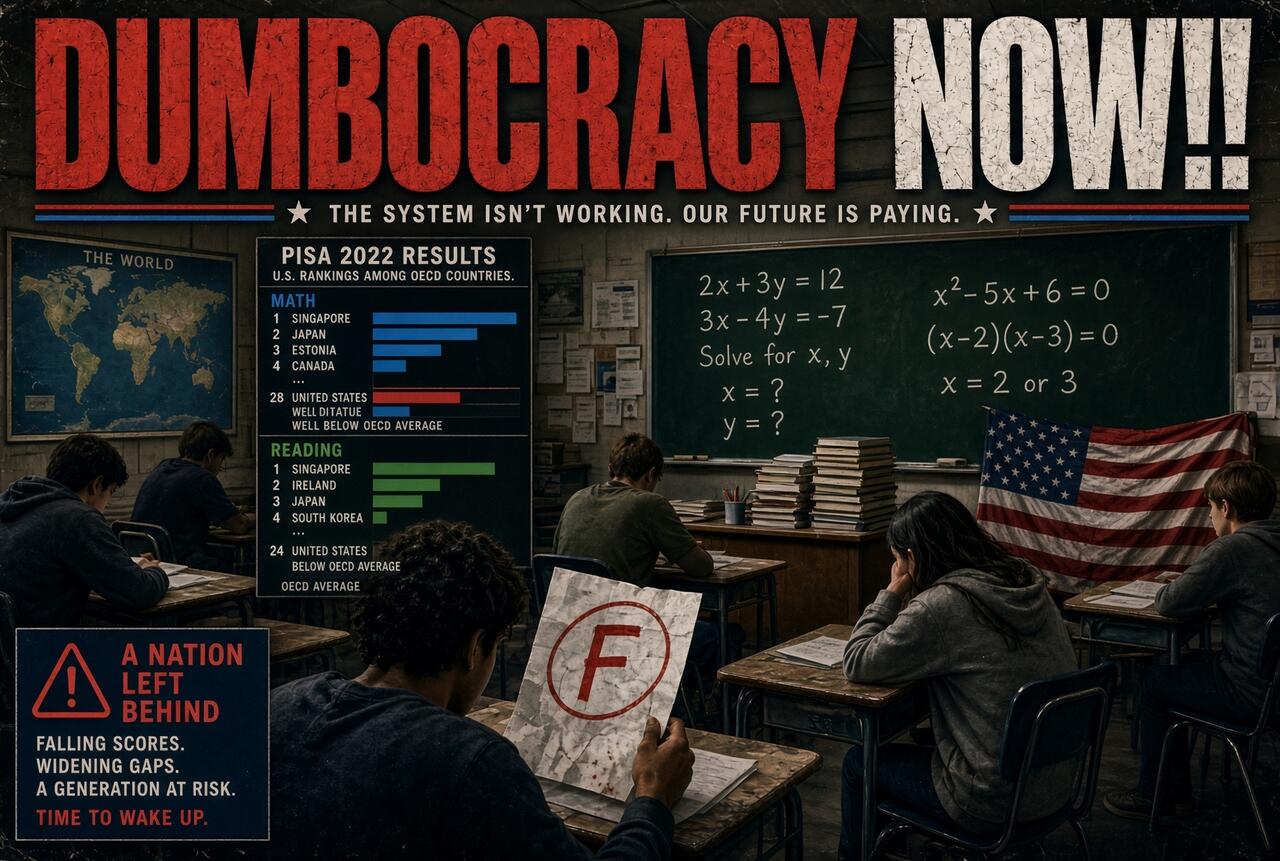
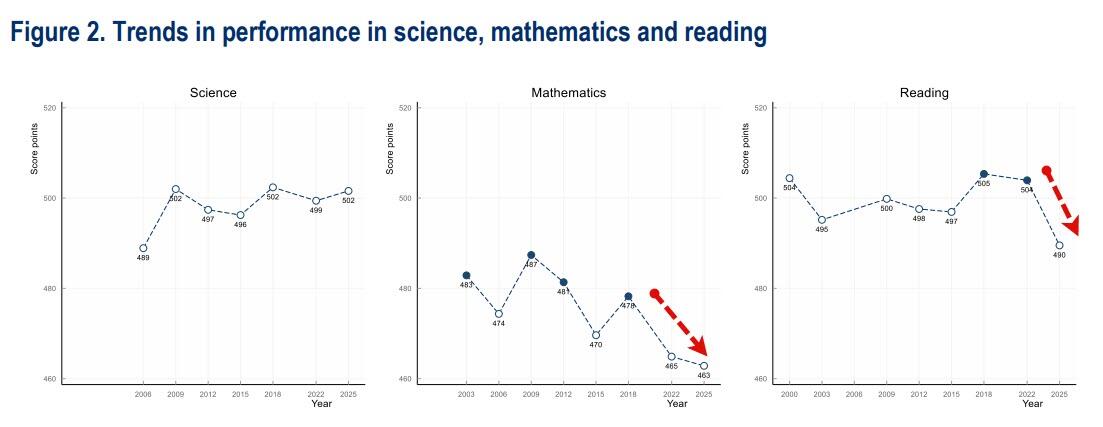
Results from a recent global assessment indicate that reading scores for American high school students have dropped over the past three years, while math and science performance still falls behind their peers in several other developed countries.

The Program for International Student Assessment (PISA), which tests 15-year-olds in math, science, and reading proficiency as metrics for college and career readiness, conducted its last tests in 2025.

The initial findings, released on Sept. 8, indicate that children from Singapore, Japan, South Korea, Australia, Canada, and the United Kingdom continue to outperform American public-school children in those three subjects.

PISA has not yet shared comprehensive comparative rankings of the 91 nations that participated in the latest assessments.

China did not participate as a nation; the four Chinese provinces that did also outperformed American 15-year-olds.

About 760,000 children across the world participated, according to the PISA website.

All told, U.S. students still performed above the average of all participating nations in reading and science, and slightly below average for math.

Compared to the 2022 PISA, average U.S. results in science remained the same.

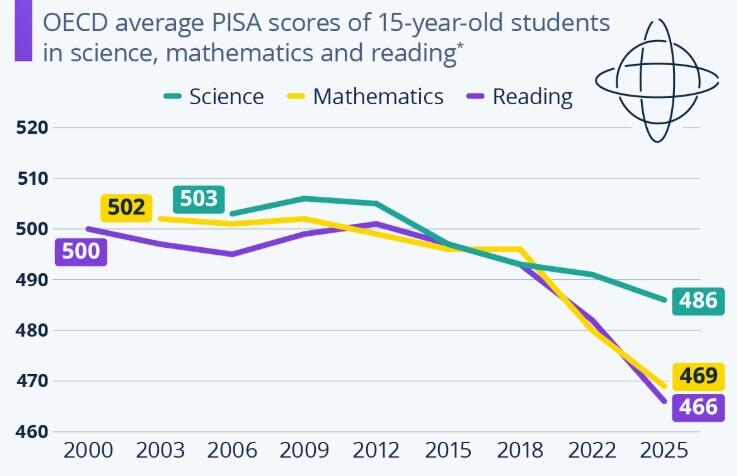
For math and reading, however, the average scores remained below pre-COVID levels and "among the lowest ever observed in PISA in the United States" dating back 26 years.

Education Secretary Linda McMahon said the nation's outdated public education needs a major overhaul that begins with universal school choice for all American families.

"The United States of America is a nation built to lead the world, yet our one-size-fits-all federal education bureaucracy has shortchanged our children and stifled our future," she said in an email to The Epoch Times.

"Today's international education scores confirm a decade of stagnation and a devastating gap: we successfully propel our highest achievers, but the lowest-performing students are falling further behind - and have suffered a loss of learning in reading equivalent to nearly a year and a half of instruction compared to 2015.

"This moment is a stress test for our nation's future. To pass it, we must enact a hard reset that stops protecting a failed status quo and instead builds a system that empowers state leaders and embraces innovative learning options through school choice."

The PISA proficiency levels range from one to six, with level two considered minimum proficiency.

Seventy-four percent of the U.S. students were at level two or above in reading, but only 13 percent were at level five or six.

The results for science were similar.

For math, 65 percent of U.S. students were at level two or above, but only 8 percent were at levels five or six, compared to 54 percent of the four Chinese provinces and Singapore's 37 percent.

The 2025 program introduced a digital computational problem-solving assessment.

U.S. children scored above the overall average in that category, still falling behind several Asian and English-speaking nations, but outperforming Germany, France, Mexico, and Brazil, according to the PISA report.

Globally, PISA determined that one in five students is considered low-performing in science, math, and reading, up from 16 percent in 2022.

Average reading scores fell by 28 points since 2015, while math fell by 22 points, according to the report.

"PISA 2025 shows that reversing declines in student performance is urgent," said Mathias Cormann, secretary-general of the Organization for Economic Cooperation and Development, which oversees the PISA program.

"The most successful education systems focus on fewer areas in greater depth, invest in teachers, engage parents, and provide targeted support for the students and schools that need it the most," Cormann said in the report.

"Technology and AI can strengthen learning and help prepare young people for the future, but only when used purposefully and not as a substitute for attention, effort, and understanding."

PISA also surveyed participants about their use of artificial intelligence to draft text in writing assignments and determined that those who did not use it outperformed those who said they did.

Tyler Durden Wed, 09/09/2026 - 15:50

Comcast Plunges As CFO Warns Broadband Subscriber Bleeding Won't Stop

Comcast Plunges As CFO Warns Broadband Subscriber Bleeding Won't Stop

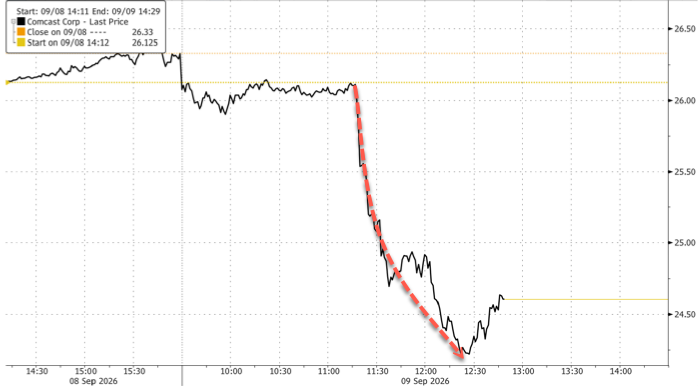
Comcast shares tumbled after CFO Jason Armstrong warned at the Goldman Sachs Communacopia + Technology Conference that broadband subscriber losses would not improve this quarter from a year earlier.

Bloomberg first reported Armstrong's comments, which sent shares down as much as 8.1% around 11:16 a.m. ET, their largest decline in months.

Armstrong told the audience at the conference in San Francisco, California, today that he still expects broadband subscriber losses to improve for the full year, although quarterly results will vary. He blamed part of the pressure on what he called "irrational fiber pricing."

Analysts tracked by Bloomberg expected Comcast to lose 103,000 domestic broadband subscribers in the third quarter, slightly fewer than the 104,000 lost a year earlier.

KeyBanc analyst Brandon Nispel expects consensus subscriber forecasts to deteriorate following the comments. He said, "We would expect CMCSA consensus net adds to move lower, where an accelerating loss trajectory could require further ARPU pressure for Subs to stabilize, a cycle we don't see ending."

Charter Communications fell 5.7% as the warning weighed on peers.

Tyler Durden Wed, 09/09/2026 - 15:05

FCC Chairman Says Agency May Issue Guidance On 'Fake Polls' Ahead Of Midterms

FCC Chairman Says Agency May Issue Guidance On 'Fake Polls' Ahead Of Midterms

Authored by AG News Staff via American Greatness,

Federal Communications Commission Chairman Brendan Carr said the agency may soon issue guidance to television broadcasters over what he called "fake polls," particularly if they are intended to suppress voter participation ahead of November's midterm elections.

Carr said Sunday that broadcasters face federal public-interest obligations because local television stations use FCC-licensed public airwaves, unlike cable networks and online platforms.

"There's a lot of interest right now in fake polls that are out there," Carr said. "And so the FCC may put guidance out soon to remind broadcasters about their obligations with respect to not airing fake polls, particularly if they're done to suppress people heading into the fall."

Carr's comments follow criticism from President Donald Trump over media coverage of political polling and his endorsement record in Republican primaries.

Trump recently called for the FCC to take action against NBC News' Kristen Welker after she said on a local NBC affiliate that Trump had experienced "mixed results" with candidates he endorsed in this year's primaries.

Trump disputed that characterization and said Welker should be reported to the FCC for "rebuke or punishment."

NBC News defended Welker.

Carr did not announce a formal investigation of Welker.

Instead, he said the FCC was considering several actions involving broadcasters and emphasized their obligation to operate in the public interest.

The FCC regulates local broadcast television and radio stations, but its authority over news content is limited by federal law and the First Amendment. The commission has historically said it generally will not intervene in complaints about one-sided or inaccurate news coverage because doing so could improperly substitute the government's judgment for that of broadcasters.

FCC Commissioner Anna Gomez, the commission's sole Democrat, rejected the idea that the agency can punish individual journalists over their reporting.

"As I've said many times, the FCC has no authority to punish journalists this administration doesn't like," Gomez said.

Carr has not specified what standards the FCC would use to determine whether a political poll is "fake" or what consequences broadcasters could face under any new guidance.

Tyler Durden Wed, 09/09/2026 - 14:50

Scarcity Warnings In Physical World Send Commodities To 14-Year High, Threatening Stock Rally

Scarcity Warnings In Physical World Send Commodities To 14-Year High, Threatening Stock Rally

Readers are familiar by now with the broad-based commodity rally, with energy, agricultural products and metals moving sharply higher as former Goldman Sachs commodities head Jeff Currie warned this summer of growing scarcity in the physical economy.

The Bloomberg Commodity Index has climbed to levels last seen in 2012...

... while the Quantix Commodity Index has hit a new record high.

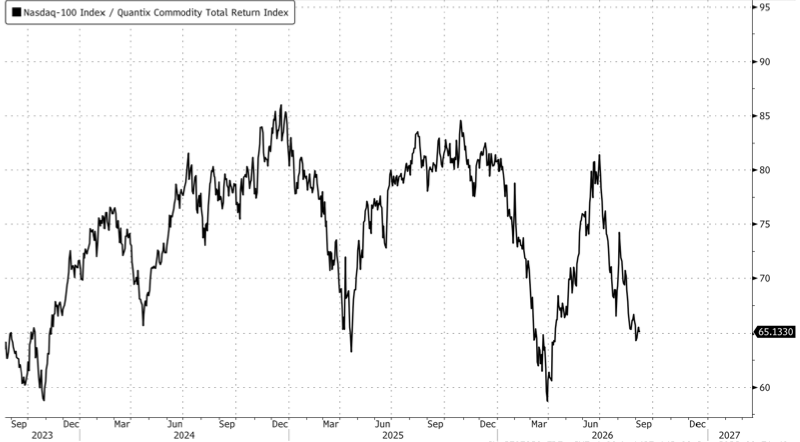
Bloomberg macro strategist Simon White is out with a new note this morning warning that the commodity rally is threatening to squeeze corporate margins and household spending, raising questions about how long stocks can withstand an inflation shock spreading well beyond oil.

White wrote:

Stocks are reacting negatively to the inflation and growth risks from commodities, which have just reached levels not seen since 2012.

Commodities are rallying, but this is no longer principally an oil story. The rally is instead broadening out. Since the beginning of August, not only are energy prices rising, such as European gas (up 34%), or gasoline (+22%), metal prices are also rising (zinc, copper), as well as precious metals (silver, platinum, gold), and softs, such as sugar, cocoa and corn.

He added:

Only a handful of the main commodities traded on futures markets (eg hogs, cattle, nickel and orange juice) are down since Aug. 1.

The energy shock affects input costs for everything from manufacturing to food production. The hobbling of refinery capacity from the Iran war has led to elevated prices for products such diesel and gasoline, inflaming transport costs.

Soft commodity prices are being further pressured by the escalation of the Russia-Ukraine war, especially in the Black Sea region, as well as concerns about a particularly potent El Nino this year and next.

For equity bulls, White warned that soaring commodity prices raise questions about how long stocks can withstand an inflation shock broadening across the commodity complex. 

He continued on that thought:

The recent rally in raw materials has taken the Bloomberg Commodity Index to near 15-year highs. On a 10-year annualised basis, returns recently reached a level they have only once eclipsed, in 2008, since the mega-commodity rally of the 1970s.

But as we can see from the chart above, when commodity prices are high, such as in the 1970s or early 2010s, stock prices falter. Equivalently, stocks tend to enjoy their best periods when commodities are historically on the low side.

The current environment of rising stock and commodity returns looks somewhat of an anomaly. Stocks are slipping today, but if commodity prices stay bid - and there are many reasons for them to do just that - the equity market has more downside ahead. (Tatiana's point on higher energy prices boosting earnings won't translate into higher stock prices if the rest of the economy is suffering from broad-based commodity inflation.)

The Nasdaq 100's ratio to the Quantix Commodity Total Return Index has pointed to this summer's renewed commodity outperformance as traders price in scarcity. 

As we've pointed out in the metals space, copper is at an all-time high, north of $14,700, and iron ore might have found a bottom, with prices in Singapore around $100 a ton. On the critical materials side, we've outlined the continued tightening of supplies from China to the West, as seen last week in a Reuters report. We've also identified miners that are poised to break China's "quasi-monopolistic" grip on critical materials.

Tyler Durden Wed, 09/09/2026 - 14:35

3rd Burning Man Attendee Dies En Route To Hospital

3rd Burning Man Attendee Dies En Route To Hospital

Authored by Jill McLaughlin via The Epoch Times,

A third person has died at this year's Burning Man Festival in the Nevada desert, according to the local sheriff's office.

Details about the death, reported on Sept. 8, were not released as festival attendees faced the usual traffic jam on their way home from the annual event in Black Rock Desert about 110 miles north of Reno.

The death occurred en route to a Reno-area hospital on Sept. 4, according to the Burning Man Project.

"We are saddened to have learned that a Burning Man participant, who experienced a serious medical emergency in Black Rock City during the early hours of Friday, Sept. 4, and immediately received on-site lifesaving measures, later passed away after being transported to Reno for medical care," a festival spokesperson told The Epoch Times in an email.

The examiner overseeing the death investigation at the Washoe County Medical Examiner's Office didn't return requests for more information.

Two other festival attendees died this year at the weeklong event that started on Aug. 30.

On Sept. 3, the first man, identified later by Sheriff Jerry Allen as Sampson Tshombe, was pronounced dead by a doctor on festival grounds.

"It is with heavy hearts that The Burning Man Project confirms a Black Rock City participant in his mid-50s experienced a medical emergency, immediately received lifesaving measures, and was transported to the onsite center for emergency care where he was pronounced deceased," the organization said of Tshombe in a statement.

Two days later, the festival reported Craigh Mann, 60, was found dead by his friends at his camp at about 3 p.m.

Mann was also sent to the Washoe County Medical Examiner's office for an autopsy and toxicology screening, according to the sheriff.

Allen reported deputies had arrested 34 people for drug sales and trafficking at this year's festival as of Sept. 5.

Requests sent to the sheriff to confirm the arrest information were not returned by publication time.

An average of one death a year is reported at the annual festival that typically attracts about 70,000 people to its temporary sand metropolis.

Last year, 37-year-old Vadim Kruglov, of Russia, was found dead at the event. Sheriff's deputies, who were investigating the death as a homicide, have not yet made any arrests.

[ZH: We have one question, while we know they went out dusty, did they go out smiling?]

Tyler Durden Wed, 09/09/2026 - 14:05

3rd Burning Man Attendee Dies En Route To Hospital

3rd Burning Man Attendee Dies En Route To Hospital

Authored by Jill McLaughlin via The Epoch Times,

A third person has died at this year's Burning Man Festival in the Nevada desert, according to the local sheriff's office.

Details about the death, reported on Sept. 8, were not released as festival attendees faced the usual traffic jam on their way home from the annual event in Black Rock Desert about 110 miles north of Reno.

The death occurred en route to a Reno-area hospital on Sept. 4, according to the Burning Man Project.

"We are saddened to have learned that a Burning Man participant, who experienced a serious medical emergency in Black Rock City during the early hours of Friday, Sept. 4, and immediately received on-site lifesaving measures, later passed away after being transported to Reno for medical care," a festival spokesperson told The Epoch Times in an email.

The examiner overseeing the death investigation at the Washoe County Medical Examiner's Office didn't return requests for more information.

Two other festival attendees died this year at the weeklong event that started on Aug. 30.

On Sept. 3, the first man, identified later by Sheriff Jerry Allen as Sampson Tshombe, was pronounced dead by a doctor on festival grounds.

"It is with heavy hearts that The Burning Man Project confirms a Black Rock City participant in his mid-50s experienced a medical emergency, immediately received lifesaving measures, and was transported to the onsite center for emergency care where he was pronounced deceased," the organization said of Tshombe in a statement.

Two days later, the festival reported Craigh Mann, 60, was found dead by his friends at his camp at about 3 p.m.

Mann was also sent to the Washoe County Medical Examiner's office for an autopsy and toxicology screening, according to the sheriff.

Allen reported deputies had arrested 34 people for drug sales and trafficking at this year's festival as of Sept. 5.

Requests sent to the sheriff to confirm the arrest information were not returned by publication time.

An average of one death a year is reported at the annual festival that typically attracts about 70,000 people to its temporary sand metropolis.

Last year, 37-year-old Vadim Kruglov, of Russia, was found dead at the event. Sheriff's deputies, who were investigating the death as a homicide, have not yet made any arrests.

[ZH: We have one question, while we know they went out dusty, did they go out smiling?]

Tyler Durden Wed, 09/09/2026 - 14:05

Google To Invest $15 Billion In AI Infrastructure And Nuclear Power In Finland

Google To Invest $15 Billion In AI Infrastructure And Nuclear Power In Finland

By Georgia Butler of DataCenterDynamics

Google has committed to investing €13 billion ($15.13bn) in digital infrastructure in Finland across 2027 and 2028.

This will include data centers and supporting infrastructure investments in Hamina, Kajaani, Muhos, and Vaala, in the country. According to Google, this is its largest single investment in Europe to date.

Google has had a presence in Finland since it acquired a former paper mill in Hamina in 2009 and transformed it into a data center. The data center is cooled with seawater, and has been upgraded numerous times over the last 15 years. In 2022, the company purchased 50 acres of adjacent land to accommodate further expansion.

In 2024, Google acquired 1,400 hectares of land in Kajaani and Muhos from state-run forest agency Metsähallitus, but did not detail plans for the sites at the time. In February of this year, it added to its Finland land portfolio again with the acquisition of 900 hectares in Vaala for a possible data center project.

With the new investment and plans to build out in the country, Google is estimating that it will bring around 16,000 construction jobs to Finland, out of a total of 37,000 jobs generated. Once operational, the facilities will employ some 7,000 people.

"Finland is an attractive destination for investments, and attracting further investment remains a top priority. Google’s decision is a clear testament to our strengths. The value of the data economy extends far beyond direct investment into spurring innovation, research, and development. Deepening our collaboration with Google will deliver lasting benefits for both parties," said Petteri Orpo, Prime Minister of Finland.

Ruth Porat, president and chief investment officer of Alphabet and Google, added: "Google is proud to deepen our roots in Finland with the company’s largest single investment in Europe, building on more than 15 years of sustained investment in Finland. This investment underscores Google’s commitment to grow our presence responsibly, pairing the expansion of our technical infrastructure with new energy capacity, grid enhancements, and energy affordability initiatives."

Alongside the investment in data centers, Google has invested in energy initiatives in the country, including a Power Purchase Agreement with Fortum to extend the life of the Loviisa nuclear power plant, two onshore wind projects developed by Valorem and Suomen Hyötytuuli, and a 94MW battery system that will be located near Google's site in Kajaani.

Tyler Durden Wed, 09/09/2026 - 13:50

Pages